Myth and Reality Slug It Out in the Glorious Vilcabamba

By Nicholas Asheshov

As seems to happen every 500 years, the Vilcabamba is on the move. Once the redoubt of the last Incas, this stand-alone world, the size of a small European country, of deep jungle valleys and aloof cordilleras in Peru’s south-eastern Andes, has become a home to drug runners, and their clandestine airstrips, terrorists, Texas oilmen, Chinese and Italian electricity engineers and, clinging to its eastern gorges, a flood of a million international tourists.


The oilmen are new, on the edge of the Vilcabamba in the Amazon lowlands at Camisea, on the Urubamba. Their pipelines, essential to 21st-century Peru, run west to Lima across the northern Vilcabamba, the Ayacucho highlands. What is new today is there are more, a lot more, of each group, and they are crowding closer together.

The Sendero terrorists work with the drug people, and they also demand and get protection money from the oilmen, kidnaping pipeline workers, killing soldiers and policemen, and dynamiting helicopters. Tourists can no longer feel safe off the beaten track. But even the most dramatic of these, say the shooting down last year of a police helicopter, piloted by a brave woman captain, is a blip compared to the epic violence and calculated cruelty of the events in Vilcabamba half a millennium ago, when young Manco Inca and Kura Ocllo, his beautiful and brilliant sister-wife, were separately tortured and assassinated. Likewise, Spanish friars just as blameless were unbearably tortured by the Vilcabamba Incas for days before dying dreadful, martyrs’ deaths.

The Pizarros and finally Viceroy Toledo in 1572 sent in savage Castilian bounty hunters, who ran Inca Tupac Amaru to earth after a chase through the jungle. Once captured, he was dragged up to Cuzco and summarily beheaded in the Plaza de Armas. By then, the plundering of Cuzco, Vilcabamba and the rest of of Peru had reached, as it had in Mexico, a level of cruelty and greed with, in David Graeber’s phrase, “mythical proportions” seen never before or since. The campaigns in Mexico and Peru were “some of the most ingenious, ruthless, brilliant and utterly dishonourable ever recorded,” he says.


“If the Incas had managed to hold out in Vilcabamba until today,” muses the English Inca authority, John Hemming, “they might be an independent kingdom still, a member of the United Nations.”

The story of the ferocity of the conquest of this culturally distinguished Shangri-La is told in two recent books, translated into Spanish. This is Kim MacQuarrie’s The Last Days of the Incas. Movingly for many Peruvians, FX announced its plan to turn ‘Last Days’ into a 12-part series, describing it with modest Hollywood hyperbole as “one of the world’s great rebellions, led by a couple of teenagers.” That was in 2013, with nothing, since reported in the Hollywood trades publications. The other title is Forgotten Vilcabamba: Final Stronghold of the Incas by Vincent R. Lee, and there’s no hyperbole here. It is one of the great books of exploration in South America, which appeared first in 2000. Separately and together, these two books contain gripping accounts of the events of the last four decades (1532-1572) of the Inca Empire as well as super stories of the machete-swinging exploration that has added a new dimension of blood-stained reality to the dusty, tantalisingly brief and inevitably contradictory archives of the conquest.


In the 1980s, Vincent Lee, an energetic Wyoming architect, opened an entirely new window on the Vilcabamba, and on the wider story of the Inca Empire, with a trio of expeditions aimed at sorting out the ruins and remains of the last, desperate days of the Incas. The Shining Path revolt had begun and few tourists ventured beyond Machu Picchu. Likewise, cocaine was not yet an important part of the picture. The Sendero Luminoso terrorists, known then and now as terrucos, were still a low-grade bunch in the Vilcabamba compared with the tough activists in Ayacucho, Puno and elsewhere. But they and small nervous bands of soldiers nevertheless provide a rumbling background to Lee’s story of tough but good-humoured travel in difficult, spell-bindingly beautiful and ancient country. Lee was trying to solve sets of multi-dimensional archaeological puzzles while fighting rain, cold, heat, bugs and the nagging lack of coffee and pisco.


Lee’s descriptions of each step along crumbling paths merge well with the chronicle accounts written four centuries ago into an always-gripping saga. We slog with him through jungle rivers and over slippery log bridges as he tries to piece together an historical jigsaw of hidden ruins and both old and new accounts of who did what to whom and where. Vilcabamba today is the single most active Sendero zone west of the Apurimac and the world’s single biggest cocaine producer.


The DEA and the Pentagon are setting up a drone ops centre there, according to the Cuzco rumour mill, a reliable source of misinformation for close on five centuries. Cheek by jowl, only a few dozens of miles away, across Vilcabamba’s jungle canyons and frozen cordilleras, on its the eastern, Urubamba side, three thousand international tourists a day brave 18 hours of ancient, narrow-gauge train shuttles to reach Machu Picchu, tourism’s holy grail. These do not always include U.S. nationals. A decade ago, the State Department issued an unusually silly edict prohibiting their diplomats from visiting and warning all their citizens they might be kidnapped and held to ransom in exchange for release of Abimael Guzman, the Sendero version of Mao Tse Tung, sitting in a Callao jail for decades until he died there in 2021.


A modern kidnapping, uncomfortable as it might be, would compare well with what would have happened to hostages 450 years ago. As Lee and MacQuarrie relate, as happened to the ill-fated Padre Diego Ortiz in 1570, you could have been dragged naked for days and freezing nights by a rope plunged through a hole in your jaw, up cliffs and through icy rivers only to have a sharp stake thrust up through your rectum and out your mouth and left for the crows and buzzards to pick out your eyes and liver. Now as then, coca-laden hillsides were spread across the valleys neighbouring the magnificent palazzos of the Inca grandees: Machu Picchu, Choquequirao Rosaspata and Espíritu Pampa. Gary Ziegler and Kim Mallville’s account of Choquequirao, on the Apurimac side of Vilcabamba, 25 condor miles from Machu Picchu, described this world-class site properly for the first time, including its vast coca-producing terraces.


It is here at Choquequirao, or perhaps at Incahuasi, a perfectly preserved Inca solar observatory perched in a craggy gap at 4,000m described by Lee, that we can best appreciate the noble cultural achievements of three millennia of pre-Columbian Andean civilisation. This was on a par, and in some ways exceeded, the highest achievements of contemporary Eurasia. Whatever, it was not a world of savage underdogs.


In the Vilcabamba can be seen, as nowhere else in South America today, the profound links of these cultures to their natural surroundings, the frozen snows of the godly cordilleras, the fertile and well-watered alpine valleys and the hothouse maelstrom of the Amazonian jungles below. John Leivers, an Australian surf master who spent decades exploring Vilcabamba, often alone, tells me that Manco’s capital at Espíritu Pampa is today off limits because the Sendero have set up one or more bases nearby. Army and police posts a bit further downstream are being strengthened.


He was planning a trek to Espíritu Pampa not long ago and decided instead to visit the remote and spectacular Incahuasi, on its stunning ridge high in the Puncuyoc Mountains. Gene Savoy, the American explorer who was the first, in 1964, to identify Espíritu Pampa as Manco’s lost capital, had been told of the Incahuasi, but never been there. Vince Lee’s party in 1984 was the fourth group of explorers known to have reached the site. In “Forgotten Vilcabamba,” he describes it properly with maps, drawings and photos of its fine stonework and superlative setting. Leivers has GPSed the site and says it is aligned on a solstice line with the great sites of the Sacred Valley. “The Vilcabamba has always been underestimated by history,” Leivers says. A good part of the province is technically an archaeological park under the care of the Ministry of Culture, aka the INC. But the INC has hardly shown its face there and the local alcaldes continually bulldoze the once well-preserved Inca roads to replace them with mud tracks for trucks to spin their wheels in.


Today’s international lawlessness and five-star tinsel is an embarrassing, down-at-heel version of the Vilcabamba of the 15th century when the Incas adapted these great valleys into their vision of the Garden of Eden. It is difficult to think of a handful of more elegantly civilized places in 15th century Europe, Tuscany, perhaps, with Leonardo, Lorenzo Medici, than Machu Picchu and Choquequirao, and a bit further upstream, Ollantaytambo and Pisac, with their thousands of wonderfully sculpted terraces. This was a productive, large-scale society, more ordered and orderly than the raucous mess of medieval and post-medieval Europe. This is what the Spaniards found in 1532, and the gold and silver they looted and carried back to Spain provided the liquidity that financed Europe’s take-off from medieval barbarism into whatever you like to call it today.


The Vilcabamba, with Machu Picchu, Choquequirao, Rosaspata and Espíritu Pampa and a network of towns, villages, warehouses, Class A, B and C stone roads and thousands of flights of agricultural terraces was dramatic then as now but really just a typically well-organized section of the Inca heartland. Machu Picchu was not, as many think of it today, an outlier at the end of the line but at the heart of a major zone extending much further on into the Vilcabamba. But with the arrival of the Spaniards, the Vilcabamba acquired a reputation it retains today, rebellious and lawless. This twist, which sees rapacious conquistadores as respectable pioneers while the Incas are turncoat rebels, is still taught in Peru’s schools. as its local version is in the U.S. and Canada, where the indigenous have been depicted as untrustworthy, unreasonable and, above all, outside the law. Vilcabamba’s two main rivers are the all-powerful Apurimac, the longest of the Amazon’s tributaries, and the Vilcanota-Urubamba, the one that plunges below Machu Picchu.


The Vilcabamba contains two great snow and glacier-covered cordilleras as well as three lesser ranges, great deep jungle valleys, high-plumed waterfalls and 3,000-foot cliffs. In my day, half a century ago, there were no roads to the Vilcabamba either on the Apurimac or the Urubamba side. Hiram Bingham had been there, but no one had followed. A steam train powered by an ancient Baldwin locomotive passed by Machu Picchu once a day on its way to the edge of the tropical jungle. In 1963 the National Geographic Society even sent in a couple of special planes, and a team of parachutists to penetrate what it called this “Lost World.” I was a member of the expedition, and eventually, I had to force my way for weeks between thousand-metre cliffs up from the Apurimac to reach the northern ramparts of a still-un-named range of gloomy 15,000 ft. cloud-shrouded mountains.

The first recorded invader of the Vilcabamba was Pachacuti in the mid-1400s, three or four generations before the Pizarros’ 1532 execution of Atahualpa in Cajamarca. Hemming’s account of the Spanish attacks on the Vilcabamba emphasises that there was really only one entrance, which is at what is today Chaullay, at the junction of the Vilcanota, Lucumayo and Vilcabamba rivers. A massive, building-sized boulder was the anchor in the middle of the Vilcanota for a succession of rope bridges. The boulder was swept away by the great 1997 avalanche, which also took away the modern bridge, replaced a few years ago.

Pachacuti’s invasion, recorded by some of the chroniclers, is well recounted by Vincent Lee in “Forgotten Vilcabamba” The book is a classic partly because Lee is familiar with the chronicles and is a respected academic Incanologist, as well as a former U.S. Marine Corps officer, an unusual combination. Unlike, too, most academics, his accounts read easily and unaffectedly. He seems someone you would like to have another beer with. The reader enjoys his casual good humour and uncomplaining confrontation with everything from stone-age jungle indians to drunken, trigger-happy soldiers. But what lifts “Forgotten Vilcabamba” from many exploration accounts is Lee’s accounts from deep in hot valleys or freezing, foggy crags and passes of just how difficult it is to know where you are.

This path up here, or that one down there? Is this wall possibly part of the complex referred to by such-and-such a chronicler? Or maybe it’s an entirely new one. Is this the one mentioned by Bingham? Or Savoy? Which river is this? Is it as described in chronicle X, or is it the one the Spaniards came down in 1572? Is this mountain so-and-so, or are we in another valley? Piecing together different sets of multi-dimensional puzzles, trying to keep your cameras dry, finding somewhere to pitch a wet tent in the rain and find something to eat, or, at least, a swig of pisco, coping with ankle twists, cuts, bruises and worse is similar, I imagine, to being behind enemy lines.


As Hugh Thomson, an English Vilcabamba honcho, has commented, “Vince Lee takes the Incas, but not himself, seriously”. This is a good combination for putting together the written historical record and the stone remains left by the Incas and, as has lately come to light, their Huari predecessors. The result is a fascinating picture of the Inca world as currently understood by archaeologists who have dug into Machu Picchu, Choquequirao, Vitcos and Espíritu Pampa. The last of these is the conurbation, the ‘metropolis’ as Lee refers to it, of the Incas long lost final capital. Lee notes that it was, for the better part of four centuries, much like the mythical Camelot and Atlantis. Hiram Bingham found Espíritu Pampa shortly after finding Machu Picchu but decided that the little he could see of the buildings there were unimpressive, so he stuck to his story that the spectacular Machu Picchu was the Inca capital. It’s difficult to blame him: Machu Picchu is the masterpiece. Also, Bingham saw but a few of the hundreds of buildings shown on Lee’s maps that depict Espíritu Pampa as a true jungle ‘metropolis.


Almost as a side thought Lee and a construction-oriented friend have solved the problem that has foxed archaeologists and everyone else: how did the Incas move and manoeuvre and fit the enormous blocks of pre-shaped limestone at Sacsawaman so precisely? He’s shown how it could have been done with simple wood tools and stone hammers. Several TV documentaries, including a NOVA special, have featured his ideas. The full story is available at his website: Today, Machu Picchu has been savagely reconstructed by incompetent and sometimes dishonest government bureaucrats.


If you compare, for instance, photos taken by Bingham, Chambi and others six or more decades ago with the walls and buildings seen today, two-thirds are not even Inca. But, of course, this matters little to the seething mass of tourists. Still, all is not lost in the noble Vilcabamba. Like Vitcos, Choquequirao and The White Rock, movingly described by Hugh Thomson in his book of the same name, The Inca remains there offer great adventures. Pisac, at the head of the Urubamba Valley, only half an hour from Cuzco, is a fine experience, and there are dozens of small, out-of-the-way ruins which provide a sense of connection and discovery. This feeling of what you might think of as participation with the Incas will be immeasurably heightened by reading the accounts provided by Vince Lee, Kim MacQuarrie, Hugh Thomson, and the acknowledged chieftain of this tough tribe, John Hemming.

This article was first published in Spanish in Caretas in 2013. Not a lot has changed since.
Downtown in The Lost Cities of the Amazon

This article first appeared in March of 2012, in Spanish in Caretas and in English in the Andean Air Mail & PERUVIAN TIMES.
By Nicholas Asheshov
Some weeks ago two events, one of them startling, came together to pin-point the mysterious new conundrum of the Amazon.

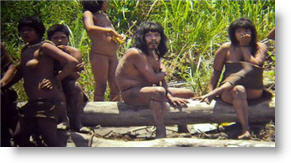
The first was the appearance on a busy riverbank in the Madre de Dios of a few dozen members of a previously-isolated group of Indians. They killed someone who had been trying to help them.

The naked Indians, seen on TV screens around the world, were described by anthropologists as descendants of an unbroken line of hunting and gathering savages, living fossils of our neolithic past.

This is, according to new Amazon thinking, incorrect. These Indians are the sad, socially degenerated remnants of nations and tribes that were productive, sophisticated and stable just a few centuries ago.

The other event was an article in The New York Times that reported on the discovery in Acre, only a few hours travel from the Madre de Dios Indians, of extensive, deep straight, or sometimes circular, trenches, ridges and mounds dating back to pre-Columbian times, indicating a large, well-developed society.

This was just the latest evidence that the Amazon, or at least parts of it, was heavily populated by well-organized societies in much the same way as the high Andes were remodelled by the Tiahuanuco, the Chavin, the Chachapoyas, the Huari, and the Incas.

Over the past couple of decades the pre-history of the Americas has been revolutionized, setting off poison-tipped academic and ecological vendettas.

First of all, the Americas were populated much earlier, at least 33-35,000 years ago, double the time previously calculated. That is back to Neanderthal epochs.

Second, there were many more people here when Columbus arrived than was earlier thought. And, most important, the societies and nations of the Americas were much more sophisticated and structured than was previously understood. They were agriculturalists, not the war-whoopers of the movies. Their mode of life and agriculture had massive, long-term effects on the original pre-human forests. Fire was a basic control mechanism.

Today the evidence of genetics, linguistics and archaeology is clear that the Amazon was not just an impenetrable green hell populated by primitive hunters and fishermen eking out an unchanging, culturally marginal existence.

The same applies to North America. Here most of the descriptions of primitive Indians come from 18th and 19th century travelers who were seeing only the sorry leftovers of great nations that had been obliterated by smallpox, viral hepatitis, influenza and other European and African diseases. The Conquest set off the Dark Ages in the Americas.

In the Amazon the same collapse, featuring malaria and yellow fever, was exacerbated by the rubber boom of the late-1800s and early-1900s.

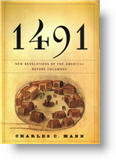
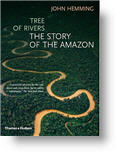
You can check this out in three fine recent books. Two of these are Charles C Mann’s easy-to-read, well-researched 1491 and a sequel, 1493, just out; and in John Hemming’s Tree of Rivers, a masterly description of the Amazon. Hemming, author of the classic The Conquest of the Incas has also written, earlier, three volumes on the peoples of the Amazon.

Charles Mann describes, for instance, how my old friend William Denevan, Professor Emeritus of Geography at the University of Wisconsin, discovered how the Beni, on the edge of the western Amazon in Bolivia, was a flourishing, well-organized center of islands and causeways on what is today a bleak, sparsely-inhabited combination of dense jungle and flood-plain, inhabited today by sad remnants of Siriono Indians.

Bill worked on the Peruvian Times just before me in the 1960s and his stories on the Beni and similar mounds and trenches around Lake Titicaca in the PT were the first indication of this revolution in South American prehistory.

“Beginning as much as three thousand years ago, this long-ago society,” Mann writes, “created one of the largest, strangest, and most ecologically rich artificial environments on the planet.”

Great stuff.

Mann describes the Amazon as one of the world’s half-dozen agricultural heartlands, where plants were domesticated, the epicenters of civilization. Others were the tropical Andes, Central America, the Fertile Crescent, and China.

The Amazon, including the area where the savage Indians appeared the other day, just north and west of the Beni, was the source of yuca, known elsewhere as manioc or cassava, as well as tobacco, peanuts chili pepper, chocolate, Brazilian broad beans, the peach palm, and Brazil nuts.

It was also the homeland of Hevea Brasiliensis, the rubber tree, which was to be, along with steel and oil, one of the three creators of the 20th century version of civilization.

For the Amazon, including the Indians on the banks the other day of the Madre de Dios, rubber became a disaster, just as gold and silver had been for Peru and Mexico. The malaria and yellow fever, imports from Africa, that it helped to spread turned the Amazon and its western tributaries into what Charles Mann calls “depopulated fever valleys.” Slavery did the rest.

The Amazon as a center of civilization has become the subject of a bitter dispute between two magnificent lady academics, the archaeologists Betty Meggers of the Smithsonian Institution and Anna Roosevelt of the University of Illinois.

Hemming mentions the two warring camps on the issue of whether or not there were tribes with sophisticated, stable, large populations: Dr Meggers says that the Amazon basically had only hunters+gatherers; Dr. Roosevelt says that there were big lively societies all over the place.

Here is a message to me the other day from John Hemming and you will find nowhere else a more precise and appropriately colorful description of the state of play today in Amazon studies.

Broadly, I think that Anna (and her acolytes like Michael Heckenberger) are right to say that there were large chiefdoms on some riverbanks of the main Amazon and its tributaries (although there were also very long stretches of uninhabited river). Those chiefdoms were based on the river and its fish and turtle resources. 

But I think that the Roosevelt school exaggerates the size and sophistication of their beloved chiefdoms, which they compare to the great civilizations of Peru.

They also exaggerate the extent of human manipulation of forests. Remember that it was very laborious indeed for early man to fell trees (other than palms) with their stone axes. And they had no need or desire to do so: they were very happy in pristine forests full of game. Planting the trees they liked near their villages was merely rearranging the deckchairs. It did not alter the Amazon landscape.

Meggers is right about the inability of Amazon terra-firma forest to support villages of more than a thousand people maximum – the surrounding game is exhausted otherwise, and the soils under mature forests are too weak to sustain large-scale farming. So, away from the rivers, early tribes were not much larger than their modern descendants at the time of first contact and before being hit by imported disease.

For many years, John was Secretary of the Royal Geographical Society, London, and we can all understand what he means by “rearranging the deckchairs.”

But not everyone agrees. Charles Mann in his just-published 1493, calls the Amazon “the world’s richest garden,” quoting archeobiologists and looking at parts of the Amazon today that are carefully-distributed and well-tended collections of trees, plants and fish and game reserves.

Today there are tourists but it can still be a tough place. Near the Acre ruins noted in The New York Times, settlers are still gunned down by big-money ranchers. I remember John telling me of the day in 1961 when he carried the arrow-filled body of his friend Richard Mason back to camp. A decade later, in 1970, I myself was searching the jungles of the Pantiacolla in the Upper Madre de Dios for my friend Robert Nichols, chief reporter of the Peruvian Times of which I was then the editor, who had set out to find Paititi, a version of El Dorado. It transpired that he, and two French companions, had been stoned to death by the Machiguengas.

Unlike John, I am not prejudiced by knowing what I am talking about and I unreservedly plump for the Roosevelt school’s bumptious Amazonian super-civilizations and I am supported by no less than Brad Pitt and Angelina Jolie. Their latest movie, due out this year, is The Lost City of Z, where Brad plays Colonel Percy Fawcett, the English explorer, searching in 1925 for El Dorado in the Amazon. Let’s hope that Brad has better luck than Percy, who never returned.

————–

Notes.
Colonel Percy Fawcett said: “The answer to the enigma of Ancient South America – and perhaps that of the entire prehistoric world – will be found when the old South American cities are located and opened up to scientific research. These cities exist, and I will prove that they exist.”
————-
Tony Morrison, the wildlife photographer and author, on a recent trip to the Beni:
“Setting out from Trinidad in the Beni we hopped on a 35b bus in the plaza and headed to the great mound at Eviata where the entire village is built above the floodplain. I went there to see the last of the Siriono tribe, as they have a base around the old mission church. What a bedraggled lot they were and the mound is now topped by a huge ENTEL satellite dish — not a bad place to site it as it should be above the annual flood.”
——
Vera Tulyneva charlie.quispe@yahoo.com . Ms Tulyneva is completing a thesis on “Paititi” at the Universidad Catolica, Lima. Commenting on The New York Times story on ancient remains in the Acre:

“The earth constructions of Acre have been in the news for the past five years. The first one to speak of them was Martti Pärssinen, an historian from Finland who had been working in the region for many years. In fact, they are not “geoglyphs,” i.e. earth figurative drawings of apparent religious/ritual function, but rather utilitarian earthworks, like drainage trenches. Acre, Mojos, Beni, Xingu and many other Amazonic regions are full of them.”
————–
Michael Heckenberger website on Xingu: The Xingu Ethnoarchaeological Project
————–
An article on Acre: Pre-columbian geometric earthworks
and Geometric Earthworks in the Upper Purus

————–
The New York Times: The Nazca Lines of the Acre jungle – Land Carvings Attest to Lost World
______________________________________

Nick Asheshov is a veteran journalist, noted explorer and entrepreneur. He was editor of the Peruvian times from 1969 to 1990.

——————————————————————

In response to this article, Dr. Jennifer Watling responded: (See her paper on the subject: Watling et al 2017 + SI)

For you to state the following: ‘These Indians are the sad, socially degenerated remnants of nations and tribes that were productive, sophisticated and stable just a few centuries ago’ for me shows a great disrespect and lack of knowledge about indigenous Amazonians and their ancestors, I’m afraid.

Best,

Jenny

Dr. Jennifer Watling
Post-doctorate Fellow,
Laboratório de Arqueologia dos Trópicos, Museu de Arqueologia e Etnologia,
Laboratório de Micropaleontologia, Instituto de Geosciências,
Universidade de São Paulo
https://www.researchgate.net/profile/Jennifer_Watling2/info

El Dorado (Paititi) The Mysteriously persistent pre-Columbian Utopia

No one has got rich by finding a lost city but there’s a dream hidden there in the mind of all of us.

By Nicholas Asheshov

Clearly, the important thing about lost cities is that they’re lost. Once they’re found, the archaeologists take over, and the tour guides won’t be far behind. Another handful of expeditions is setting off this season, as there will be every year forever. There is more chance of hitting the New York State lottery than of finding El Dorado or Paititi but every expeditionary would rather find The City than win the lottery. To discover the unknown past is as good as, and more believable and possible than, seeing and touching a UFO. Show us the man who can prove that El Dorado and UFOs don’t exist!

Peru has been supplying genuine lost cities not just way back when, like Turkey or China, but this century -Machu Picchu to begin with and more recently Pajaten and Espiritu Pampa in the mid-60s and Gran Vilaya just 10 years ago.

From the 1980s, too, came Sipan, the startling, rich pyramid, which for these purposes qualifies as a city, hidden not behind the Andes in impenetrable jungle as required by lost city lore but out in the open desert not far from the Pan-American Highway. But coastal sites like Sipan are mostly produced by archaeologists, in this case Walter Alva, a dedicated, persistent scientist who thoroughly deserved his success.

But archaeologists are trained to keep their noses to the ground, preferably below ground. Their grasp of the nitty-gritty doesn’t allow them to see the wood for the trees. So they rarely find the genuine Lost Cities out in the bush and actually they hardly even go looking for them. It wouldn’t be scientific. The real thing is invariably searched for and found by people who act like, and sometimes even look like Harrison Ford. They include, in the case of Peru this century, Senator Hiram Bingham, Colonel Percy Fawcett, Gene Savoy and Robert Nichols. A handful of others, including Vincent Lee, Robert Randall and Yoshiharu Sekino have also been prominent in looking hard, scratching the surface of the Amazonian flanks of the Andes.

Bingham and Savoy both survived their adventures and went on to become well-known and established in their own country, the United States. Savoy is alive and well in Reno, Nevada, though he is just about to set out on yet another sea-faring trans-Pacific adventure in a 20 meter mahogany catamaran with two Mochica dragons as prows. That’s the kind of style lost city discoverers like to travel in no cut-rate economy class for them.

Nichols, Fawcett and Randall are dead. Nichols was killed by Indians 25 years ago as he searched for Paititi, a fate suffered by Col. Fawcett half a century earlier. Randall, based for years in Ollantaytambo, died five years ago after being bitten by a dog.

40 kms from Cuzco, in Pusharo, in the jungles of Madre de Dios, there were found petroglyphs covering 14 meters of a massive rock wall, apparently part of a religious complex, thought by some to indicate the existence of a lost city with the characteristics of Paititi.

Up-and-comers include Vincent Lee, a Wyoming architect, who is apparently about to produce a book on Vilcabamba. I myself spent part of my early years in Peru looking either for lost cities or for people who had got lost looking for one it’s basically the same thing and I own a hotel in the Sacred Valley which is riddled with ancient cities and an integral part, for sure, of the greatest lost city territory left on Earth.

Savoy, now in his sixties, has always look more like Buffalo Bill than Harrison Ford, but he has the same outlook. Why is he going to sea rather than looking for lost cities? “Living among the gamblers in Reno, you learn to quit when you’re ahead.” Savoy says today. “I was getting like an old gunfighter. It was too easy. That’s dangerous.”

Savoy also helps to explain why it is explorers and not archaeologists who find the lost cities. “Getting into archaeology would have stopped me dead.” he says. “Digging into a pit, messing around with carbon 14 and the other bits and pieces. History, not archaeology, is the key.” Listen carefully, explorers. Savoy is the only man alive who has won the lost city lottery. Three big, big ones, and a score of lesser, excellent finds. At that level we are talking not of gamblers, but of the fellow who owns the casino.

Two on my list set off to find El Dorado but never returned. The first was Colonel Fawcett, an eccentric English army officer, a qualified surveyor who among other things fixed a big part of the Bolivia-Peru frontier, and did it so well that it has never been disputed.

Colonel Fawcett was doing this at the same time, 1910-11, as Bingham was marching down the Sacred Valley finding Machu Picchu and Rosaspata. Inspired by Bingham’s success, he returned from England in the mid-1920s at the head of an expedition but this time heading, via Rio de Janeiro, for the north-western corner of the Mato Grosso, near the Bolivian frontier.

I can’t recall what the logic of his search was, though it was certainly based on stories from locals and Indians he had encountered on his previous travels and surveying. But he disappeared forever and set off a whole school of lost city excitement in England for two or three generations of adventurers who would set off to find both Col. Fawcett and the Lost City that he had presumably found and where he and his son Jack were being held captive in incredible luxury. (Another son, Brian Fawcett, lived for years in Peru and was the foremost authority on steam trains in the Andes).

In fact Percy Fawcett was killed by Indians in 1925, as proved more or less conclusively by the Villas-Boas brothers, the Brazilian Indian specialists, in the 1950s.

The same fate was suffered by my friend Bob Nichols, a tough, unassuming traveler from Oregon. Bob was in his thirties during the 1960s when he spend several years in the Convencion valley, below Cuzco and then in the Alto Madre de Dios jungles at the bottom of the Q’ospipata valley. It’s a tough place today even though a few tourists pass by in powered canoes but it was a really tough place in those days.

Bob was an unusually fine writer and got a job with me as a reporter on the Peruvian Times. After a year he told me he wanted to go and find Paititi. His time down in the Madre de Dios had provided him with the inside story, the clues from the indians, whatever. For Bob this last piece of the legend turned out to be unbelievably, tragically true. He, two French friends and half a dozen Mashco Indians set off up the Rio Palatoa from the Dominican mission at Shintuya. They passed the Shinkikibeni petroglyphs. The guides returned, having refused to go on, Bob and the two Frenchmen pressed on. They never reappeared. Many left for El Dorado and never returned.

One doesn’t ask questions. Among lost city fans Paititi is the name for a kind of Inca or pre-Inca lost city-state which, in most versions, is still functioning. It is, at least, zealously guarded by impenetrable jungle and impassable ravines as well as by 20-ft bushmasters (shushupes), jaguars and, of course, deadly Indian-guardians.

This was 1970. I spent six months  looking with no success and no further indication of a Paititi. But two years later a quiet young Japanese law student went in alone and with splendid persistence and courage found, photographed and chatted with three Machiguenga Indians who told him how they had killed the three explorers. They gave him enough bits of paper and other objects to show, beyond doubt, that their story was to be believed.

Yoshiharu went back more than once, armed with satellite photographs which showed for this area a series of “dots” apparently in some triangulate alignment. He found nothing but went on to other parts of Peru and produced a super collection of photographs of Peru’s jungle and mountain peoples. Dr. Carlos Neuenschwander, an Arequipa physician, subsequently persuaded the air force to fly into this area, the Pantiacolla range of hills, with a helicopter but found nothing. “Everybody always wants them but you never find anything with helicopters,” says Renato Marin, a Cosquero naturalist and explorer who knows this part of the world better than anyone else. Mr. Marin thinks that there’s a good chance of finding a genuine big city up in the hills behind his former hacienda, Amaybamba, in La Convencion, just downriver form Machu Picchu itself.

Two main areas of the mountains and the jungle in Peru are the most consistent producers of ancient cities and fortresses.

The classic area is to the north of Cuzco anywhere in an arc from Ausangate to the south and east around through Quincemil and across to the Alto Madre de Dios and Alto Manu and then up towards Atalaya, then back up the western flank of the Apurimac basin towards Ayacucho. Actually, I’d include most of the area north of a line between Cuzco and the northern shores of Lake Titicaca, including the Bolivian frontier region.

I’d say that half the world’s lost city people will continue, in my view rightly, to comb this often difficult, outstandingly beautiful, powerfully evocative area with its fine track record. This place smells of lost cities and, why not? lost tribes. Inca roads dive off the highlands into impenetrable jungle and other essentials, including risky, difficult-to-locate Indian groups. Two or three of these have been found within helicopter distance of Cuzco in the past three or four decades. They’ve even attacked oil exploration parties (they didn’t get ’em).

The other area is in the North, around Chachapoyas and the great fortress at Kuelap. It’s in this region that Gene Savoy found Gran Pajaten and, later, Vilaya. Savoy also found dozens of other remarkable sites in this area. It was Savoy, too, who located and correctly identified Espiritu Pampa, in the Vilcabamba as the last refuge of Manco Capac and Tupac Amaru.

If you think that you will be popular and meet interesting people once you have found a lost city you may be in for a surprise. You might think that your efforts, which undoubtedly provide work for needy archaeologists, would make you respected by them. Not at all. They dislike Savoy intensely and they hated Bingham, the finder of Machu Picchu, Rosaspata and a handful of other world-class ancient remains. Both of them were accused formally of being grave-robbers and huaqueros (people who illegally dig up artifacts and sell them at Sothebys). I myself had to dig Savoy, at that time a reporter for the Peruvian Times, out of clink in Lima on one occasion a quarter of a century ago.

This is pure jealously on the part of archaeologists and locals who didn’t have the persistence and perception to get there and stand up and say “I found it!”. Neither Bingham nor Savoy claimed any special academic knowledge. What both of them did was to do a lot of homework, reading the chronicles carefully. They also listened carefully to their guides and travel companions.

“Do your research, period,” Savoy says. “History is the key. If someone was there and left a record, find it. Also, local people know. Ask, and listen to their answers.”

What Savoy is saying sounds obvious but actually almost no one follows this advice. This is a mistake not made by another branch of lost citying, looking for lost treasure galleons. The winners there comb the records religiously before setting out.

This is not at all the style for most lost city searchers. What they all do, I did it myself, is to look at the map and say to themselves and their chums. “This looks like a likely spot. There are no roads, the approaches are dreadful, my friend X’s father’s peon said there is an Inca road that goes straight off that away and he found a golden amulet. Also, it’s not been properly mapped.” (This statement applies to almost all of the area north of Cuzco and the Sacred Valley).

A few travelers tales from missionaries easily the most unreliable sources and farmers and hunters rounds out the picture and before long we’re out shopping for Brazilian snake-bite serum, asking how much helicopters cost (too much) and ordering zip-lock plastic bags from Miami.

Lost cities and fortresses not found on maps remain invisible to air photography

The main basis for thinking that Paititi is off the map is because the Incas are supposed to have thought that the Spaniards were after their last gold hoard and that they ran off with this into the jungle.

Victor Angles, an amiable Cuzco historian who has written extensively on Incas and their ilk, says that this is hogwash. “The Incas thought the Spaniards were gods and handed over ever bit of gold to them. There’s nothing left. There’s no Paititi.”

There may be historical logic to Mr. Angles’s thinking. But it’s not going to cut much ice with the lost city crowd.

He himself puts a big “But…” into his own thesis after he describes how the Count of Castelar sent the King of Spain documents, which indicated that the ‘Empire of Paititi’ was at the confluence of the Beni and Mamore Rivers more or less where Percy Fawcett was heading.

Mr. Angles continues, “When more complete ethnological studies are carried out on the native tribes in Peru’s southern jungles, we’ll have more light shed on Paititi.”

Those are our marching orders. We must shake the moths out of our mosquito nets!

If you though Terra Incognita was only on ye olde maps, take a look at the latest satellite-based charts produced by the Department of Defense (DoD), Washington and the excellent Instituto Geografico Militar, Lima. The DoD (the Pentagon) are the people who can put an Intercontinental Ballistic Missile into the kitchen in the Kremlin, but they haven’t got round to backland Peru. Big slabs of maps within a day’s march of Machu Picchu are blank, with the lame excuse “Not Covered by Aero photographs.” And this is the satellite age.

Lost city people, take note and take heart. The DoD people, lost city men for sure, are keeping something back.