On Saturday 7 earlier this month a cheerful memorial service was held at Great St Mary’s, the Cambridge University church in honour of Michael Kuczynski, the distinguished Peruvian economist. Great St Mary’s is at the heart of one of the world’s great institutions of learning and the nave was packed with 500 well-known academics and friends saying farewell to Michael, an Emeritus Fellow and longtime Director of Studies at Pembroke, a leading college among the couple of dozen which form the backbone of the university.
A full chamber orchestra, a string quartet and a world-ranking choir as well as the full power church organ provided Bach, Brahms, Foure and others between speeches and recounted memories of Michael’s distinguished contributions to Keynesian economics to generations of students. His elegantly Anglo peruvian eccentricities included How to mix a properly Keynesian Martini shaken as it were into the Kuczynski course in abstract algebraics. Older students recalled for the congregation finding a lost cat and a grand piano under mountains of ancient essays and theses.
John Hemming, an Oxford man and contemporary there of Pedro Pablo, Michael’s older brother tells Fredy Cooper and me how The Master of Pembroke read out an account from Pedro Pablo of Michael’s teenage attempt to escape their grim cold harsh boarding school in the North of England.
PPK himself was prohibited by one of today’s pathetic government from attending his brother’s memorial service. Or anywhere else. His doctors, for instance, at the Mayo Clinic in New York or even more than a mile or two from his house in San Isidro.
In the case of the memorial to Michael he was able, thanks to Cambridge, able to listen from his home in San Isidro to a livestream from Great St Mary’s 6,000 miles away.
Michael had died in Lima three months earlier from a sudden stroke. He had spent all of his holidays in Lima keeping his older brother company since Pedro Pablo was kicked out eight years ago of the presidency in 2018 in a shameful backstab coup. The main coupster, the disgusting Viscarra, is today in jail for embezzling and taking bribes.
No charges against PPK have been brought by teams of crooked Fiscales. He has been under effective house arrest for the past eight years for having allowed himself to be couped and silenced by cheapo backstreet politicians some of whom are today in jail and others in power in the presidency and the Congress which has been a shambles since.
Michael was cremated in Lima. Pedro Pablo, with friends and family, were at least allowed by the authorities to attend the funeral in La Molina.
Some months ago PPK had completed the paperwork to be permitted to travel to New York and the Mayo Clinic. At the airport the emigration officials prevented him, under illegal orders from a ‘premier’ called Arana, a lawyer, from boarding the plane.
PPK is 87 and has not been allowed to see his wife Nancy, stuck in Wisconsin for eight years. Many Peruvianns will be glad to know Michael Kuczynski was treated with a sad yet good cheer and honour where, it seems, it matters.
John Hemming tells me that after the splendid Anglican memorial service at Great St Mary’s everyone was invited to the ancient lawns and buildings of Pembroke to champagne and canapes. That, one feels, is the way to treat distinguished public servants like the hermanos Kuczynski.
Six decades ago I arrived at the port of Talara on the edge of the northern desert after a three-week trans-Atlantic, trans Panama voyage on a small oil tanker, El Lobo out of Cardiff. I had boarded as a supernumerary member of the crew the day after being released from university. For a night or two I was a guest nearby of the Lobitos Oil Co at one of their spacious bungalows in the desert, surrounded by clanking well pumps, I was attended by mayordomos in white gloves, something unheard of in England, my England, of the grey post-war ’40s and ’50s.
A week or two later at a general store in Ayabaca, a market town in the forgotten depths of the Peruvian Sierra near the Ecuador frontier, I treated myself after a jolting night on the back of a lorry to a bottle of beer.
In those days beer was sold in macho pint bottles. The store did not have a bottle opener. A quiet middle-aged resident was propping up the wood counter. He said, “Gringito,” signaling me to bring him the bottle. He smiled, put the top in his mouth. Without effort, he bit off the cap. Foam flowed. He spat out the bottle top into the floor sawdust.
I had not heard in my 21 years of this solution to a problem I had not imagined existed. I did not know if it was permitted, even physically possible. I have since seen it done from time to time, say on a wooden barge on the Ucayali or on a distant Andean patio.
Like any South American, I would learn to pop a bottle with the back of a table knife, a machete, or the fender of someone else’s Toyota. On this occasion, in any case, biting off the cap gave me a shock which has remained as you see with me for more than half a century. An education in no-nonsense courtesy. Until then I had been cossetted by English rules. The proper way of doing things is the only way.
Fear God, Honour The King
I see, looking back, a new un-English life of spontaneous friendliness, opening new opportunities beyond stiff self-satisfaction. Our school motto among the Greco-Roman porticos was Fear God, Honour The King. Not much wiggle room there.
With the jaw-clench bottle top eye opener, I began to leave behind some of the certainties of being English. I was edging into a world beyond gentle-fingered Wimple St dentists, rinsed glasses. Places with names like Lydeard St Lawrence, West Bagborough, Trumpington Street.
I signaled my new compañero to have a swig. We would have taken it in turns, a first for me, to reach the bottom of the bottle. My Latin was better than our combined Spanish. The job was done with a matey Salud as the last man emptied the dregs into the sawdust.
In those days sons used to write weekly letters home to Mum. I did not recount this bottle-cap incident. Mum, a doctor, might have panicked, sent a return ticket on the PSNC, Pacific Steam Navigation Co mailboat. My soft wartime English haw-haw teeth would never cope with even today’s sissy half-pint throwaways. I still take my occasional hit from the bottle, even in a restaurant, wiping the top with the palm of my hand remembering my maestro.
Do you ride?
On the Ayabaca plaza outside that same day, I ran into, as one did in those days, the Sub Prefect, a Limeño not much older than me. A job for the boy’s political appointee of the Manuel Prado government, he would tell me later.
“Do you ride?” I nodded. “Leave your bag in my office.” He was off for a few days to deal with this and that in the outback. We would be accompanied by an ADC, a friendly young local who had a revolver in a holster on his waist under his jacket.
This was the first person I had met who carried a gun. Life went up a new couple of notches. Another something not to tell Mum. I was taken off to buy a proper sombrero and, as I recall, a poncho to throw over the saddle and to keep me covered through the tropic night.
On horses supplied by each pueblo, we clattered through a movie set of dry jagged peaks up and down old paths, forded rocky rivers stopping to chat at haciendas and tiled adobe villages. One day we were joined by a group of landowners armed with revolvers and carbines in long holsters built into the front of their saddles. Sitting on our horses in a wide semi-circle in front of us stood a dozen men, gesturing angrily, talking loudly, campesinos armed as was everyone in those days with machetes.
The matter was, as often in the valleys of the Andes, about water. Cactus, scrawny cattle, mangy dogs, buzzards were the wildlife. I knew exactly where I was, who was who. The leader of the landowners, on his arrogantly well-fed horse with his henchmen was Lee Marvin. My friend the Sub Prefect was Clint Eastwood, the county sheriff. In the middle, protesting at the head of his hardscrabble neighbours was Jimmy Stewart, rising above himself.
Here I was with three of the legends of our time sitting on a scrawny pony in equatorial dust and heat. I was not in the mezzanine of the Leicester Square Odeon. A day or so later found us in Frias, a no-road pueblo.
How about a game of chess?
The scene was again the general store whose owner was a young Nissei. It was a meeting place with some chairs and tables. “Chess?” the owner said, “Chess?” I had been on the school team though I have never been able to plan more than a move ahead, much less spot what my opponent is plotting. I had just exited one of the world’s ancient universities, been schooled by some of the finest academic minds of the day.
We sat down. Within five minutes I had to knock over my King, acknowledging defeat in, what was it, seven, eight moves? It was not a defeat, it was a rout. He was in some Maestro class beyond my comprehension. Here I was in the back of tropical beyond. I had been slaughtered. A second game surrounded by a score of townsmen, some of them knowledgeable. Maybe I got to a dozen moves. With chess, there is no masquerade, nowhere to hide. I can remember the calm, good-humoured Japanese entirely pleasant face. I hope I had the grace to buy a few beers, a nothing price for what as you see, goes beyond a lesson.
As it had been with the bottle-opening, it was an education. I have over the years been knocked down a richly-deserved peg many times. In this case it was a painless privilege.
I have been living on the outskirts of Frias ever since, rarely learning lessons until it is yet again too late. I would love to have an annotated record of the games for my children, grandchildren to show them, unbelieving, how Grandad, just off the boat, had been mercilessly and oh so rightly samurai-ed.
A few days later returning to Ayabaca over new passes through different valleys, I took part in a horse race from which I was taught, though never properly absorbed, another lesson.
This was not a modest affair. I cannot remember how it was set up. The local folk lending us their horses to get us to the next valley decided to turn it into a sporting event. It would be a race, a two or three-hour run. Call it a score of miles uphill and down dale, fording rivers, running along cliffside paths. The locals knew the paths, the course.
We, us visitors, would choose our mounts. I knew well enough how to ride. I had not, however, the slightest talent, and still don’t, for judging a horse. As we milled around trying, in my case, to look as though I knew what I was about, an older man approached. “Gringito!” He took me to one of the ponies. “This is the one for you. It’s mine. You’re nice and light. I know you’ll look after her.”
I announced my horse. Long faces showed I had made the right choice. Of course, she might be Pegasus herself but if I had no idea of the route, the finish, it would be to little avail. I did the obvious, cantering behind a couple of well-mounted savvy locals.
The pace picked up. One of the two went up ahead, me tucked in a couple of lengths behind ready to make my break in the final furlong. Prudent yes, subtle no. The local pointed to a white house on the edge of the pueblo below, half a mile along our main path winding down the hill. A cry went up behind.
I looked back to see everyone turning down a side-path shortcut, the other smart rider streaking ahead. I jumped a ditch into a barren field and cut ahead of the main pack. The winner was, however, cantering with his sombrero waving, victorious, a disappointment to many. I had been odds-on favourite. I have forgotten what prize was won by the winner. It must have been worth the while because my Second place brought me a pair of battle-ready fighting cocks. These I gave to the owner of my pony.
You can draw your own lessons. They revolve around when to make your break and, how to spot where the smart money is really going.
This story I would certainly have sent to mum. Our family had been Londoners of the prosperous Forsyte genre. She would have enjoyed recounting it to her county sisters with the fighting cocks adding a macho touch of South America.
Returning home via the travelling circus
After three years in the Sierra and selva, I returned at the end of 1963 to London to work on Fleet Street. To get home I would cross the continent by land to Rio and catch the BOAC to spend Christmas with Mum. Puerto Maldonado was the Far East of Peru with no roads to Brazil or anywhere else. I pushed through the rubber plantations of Iberia and Inapari, walked and canoed across the Bolpebra tripartite frontier. I knew I was in Brazil when from a thatched house on stilts the radio was blaring a samba. They helped me hitch my hammock to their rafters.
I caught next morning a passing canoe on the Rio Acre to reach Brasiléia, a small dorp facing Cobija, a Bolivian outpost over the river. In the evening I went, like everyone, to the travelling circus. The lissome star of the show was Bolivian, 16, she told me. She was the trapeze artist. The cuerda floja was a good five feet above the ring. Everyone cheered and clapped. Soon the ringmaster, a jolly Brazilian pointed at me. “Hi Gringito! Come and show us what you can do!” More cheers.
The Bolivian girl came in her slight uniform and to applause, cheers pulled me into the ring. The ringmaster said quietly to me, just go along with it. He had a bucket of water which he signalled to the kids not to tell me about.
The Bolivian girl talked in a loud voice. “Nobody is going to do anything, are they children!” The ringmaster crept up behind. Kids shouted, “Look out behind you!” I turned slowly to give him time to keep behind me. Nothing to worry about! I gestured to the crowd. And so on. Finally the ringmaster, or maybe it was the girl herself, emptied the bucket over me. At the end of the show, the ringmaster sent the girl to bring me to him. “Hey, young sir! You did great! Excelente! Incredible talent! I want you to join my circus. We’re going on downriver. Get to Manaus for Christmas. All expenses paid.”
“He’s our new star!” he said to the girl, who nodded loyally, giving me a not very enthusiastic smile. The ringmaster looked at us both. He may even have said sotto voce, “She’s fallen for you.”
I thanked them and said I would consider it with the greatest interest. I still think of it 60 years on as the best job offer I have had.
The dark of the warm Amazon madrugada of 03:00 saw me on the riverbank with my hammock and kitbag. I caught the first canoe sliding swiftly silently downriver. It was two thousand miles by jungle and Mato Groso road to Rio. I caught the BOAC and was with Mum all present and correct at Pyleigh Manor Farm for Christmas.
I might not have learned much in these early outings into the heartland of South America. That said, when in the Amazon you find yourself in extreme peril do not think do not look back keep running till you are high, dry and home.
Things have since changed a little
My workplace these days is no longer a rowdy scrum of people, paper and phones. Today I sit in a glass-enclosed verandah which catches the afternoon sun, rendering it with its woodland and mountain views relentlessly restful. The family dog and cat breath gently from the polished hardwood planking. On the inside length is a 20-foot-high, two-foot-thick adobe wall on which hang family paintings, drawings, shelves of books, a 19th-century wind-up clock which tick-tocks and chimes through the day and Andean night.
The open side is glasshouse windowpanes looking onto a woodland of thick tall cedars, walnuts, Mexican Cherry, pisonays, and sub-tropical versions of plants like fuchsia, Kantu, deadly nightshade aka belladonna. Occasionally we see otters tree sloth and the Andean weasel. Toads and tree frogs, no snakes, few mosquitoes. Behind these to the North, rise snowcapped peaks and glaciers, the 6,000 m Cordillera Urubamba. On the other, a hundred yards away through the trees flows the Rio Vilcanota.
Trailer: La Batalla de Guayatacocha.
Fifty miles downstream the waters will plunge through the Machu Picchu gorge on their way into the still-distant Amazon. Flocks of parrots, hummingbirds, hawks and falcons, owls, migrators and river fowl, the garden varieties with names like Golden-billed Saltator, Black-backed Grosbeak, (yellow-black) Hooded Mountain-Tanager (tallow-blue) Chestnut-Hooded Siskin provide a video soundtrack from first light through sunset and on into the clear cold night of 2,950 m.
There I am sitting on a donut in a businesslike wooden chair. The laptop on the table erupts in a sleepy autoburp. I emerge from some daydream and write a few more paragraphs of ‘Forgotten Secrets’, my three-volume saga of a decades-long modern rebellion in the back country of the Amazon. The first book, published by Planeta, Madrid and Lima as La Batalla de Guayatacocha. Una novela de Nicholas Asheshov is in the bookshops.
As seems to happen every 500 years, the Vilcabamba is on the move. Once the redoubt of the last Incas, this stand-alone world, the size of a small European country, of deep jungle valleys and aloof cordilleras in Peru’s south-eastern Andes, has become a home to drug runners, and their clandestine airstrips, terrorists, Texas oilmen, Chinese and Italian electricity engineers and, clinging to its eastern gorges, a flood of a million international tourists.
The oilmen are new, on the edge of the Vilcabamba in the Amazon lowlands at Camisea, on the Urubamba. Their pipelines, essential to 21st-century Peru, run west to Lima across the northern Vilcabamba, the Ayacucho highlands. What is new today is there are more, a lot more, of each group, and they are crowding closer together.
The Sendero terrorists work with the drug people, and they also demand and get protection money from the oilmen, kidnaping pipeline workers, killing soldiers and policemen, and dynamiting helicopters. Tourists can no longer feel safe off the beaten track. But even the most dramatic of these, say the shooting down last year of a police helicopter, piloted by a brave woman captain, is a blip compared to the epic violence and calculated cruelty of the events in Vilcabamba half a millennium ago, when young Manco Inca and Kura Ocllo, his beautiful and brilliant sister-wife, were separately tortured and assassinated. Likewise, Spanish friars just as blameless were unbearably tortured by the Vilcabamba Incas for days before dying dreadful, martyrs’ deaths.
The Pizarros and finally Viceroy Toledo in 1572 sent in savage Castilian bounty hunters, who ran Inca Tupac Amaru to earth after a chase through the jungle. Once captured, he was dragged up to Cuzco and summarily beheaded in the Plaza de Armas. By then, the plundering of Cuzco, Vilcabamba and the rest of of Peru had reached, as it had in Mexico, a level of cruelty and greed with, in David Graeber’s phrase, “mythical proportions” seen never before or since. The campaigns in Mexico and Peru were “some of the most ingenious, ruthless, brilliant and utterly dishonourable ever recorded,” he says.
“If the Incas had managed to hold out in Vilcabamba until today,” muses the English Inca authority, John Hemming, “they might be an independent kingdom still, a member of the United Nations.”
The story of the ferocity of the conquest of this culturally distinguished Shangri-La is told in two recent books, translated into Spanish. This is Kim MacQuarrie’s The Last Days of the Incas. Movingly for many Peruvians, FX announced its plan to turn ‘Last Days’ into a 12-part series, describing it with modest Hollywood hyperbole as “one of the world’s great rebellions, led by a couple of teenagers.” That was in 2013, with nothing, since reported in the Hollywood trades publications. The other title is Forgotten Vilcabamba: Final Stronghold of the Incas by Vincent R. Lee, and there’s no hyperbole here. It is one of the great books of exploration in South America, which appeared first in 2000. Separately and together, these two books contain gripping accounts of the events of the last four decades (1532-1572) of the Inca Empire as well as super stories of the machete-swinging exploration that has added a new dimension of blood-stained reality to the dusty, tantalisingly brief and inevitably contradictory archives of the conquest.
In the 1980s, Vincent Lee, an energetic Wyoming architect, opened an entirely new window on the Vilcabamba, and on the wider story of the Inca Empire, with a trio of expeditions aimed at sorting out the ruins and remains of the last, desperate days of the Incas. The Shining Path revolt had begun and few tourists ventured beyond Machu Picchu. Likewise, cocaine was not yet an important part of the picture. The Sendero Luminoso terrorists, known then and now as terrucos, were still a low-grade bunch in the Vilcabamba compared with the tough activists in Ayacucho, Puno and elsewhere. But they and small nervous bands of soldiers nevertheless provide a rumbling background to Lee’s story of tough but good-humoured travel in difficult, spell-bindingly beautiful and ancient country. Lee was trying to solve sets of multi-dimensional archaeological puzzles while fighting rain, cold, heat, bugs and the nagging lack of coffee and pisco.
Lee’s descriptions of each step along crumbling paths merge well with the chronicle accounts written four centuries ago into an always-gripping saga. We slog with him through jungle rivers and over slippery log bridges as he tries to piece together an historical jigsaw of hidden ruins and both old and new accounts of who did what to whom and where. Vilcabamba today is the single most active Sendero zone west of the Apurimac and the world’s single biggest cocaine producer.
The DEA and the Pentagon are setting up a drone ops centre there, according to the Cuzco rumour mill, a reliable source of misinformation for close on five centuries. Cheek by jowl, only a few dozens of miles away, across Vilcabamba’s jungle canyons and frozen cordilleras, on its the eastern, Urubamba side, three thousand international tourists a day brave 18 hours of ancient, narrow-gauge train shuttles to reach Machu Picchu, tourism’s holy grail. These do not always include U.S. nationals. A decade ago, the State Department issued an unusually silly edict prohibiting their diplomats from visiting and warning all their citizens they might be kidnapped and held to ransom in exchange for release of Abimael Guzman, the Sendero version of Mao Tse Tung, sitting in a Callao jail for decades until he died there in 2021.
A modern kidnapping, uncomfortable as it might be, would compare well with what would have happened to hostages 450 years ago. As Lee and MacQuarrie relate, as happened to the ill-fated Padre Diego Ortiz in 1570, you could have been dragged naked for days and freezing nights by a rope plunged through a hole in your jaw, up cliffs and through icy rivers only to have a sharp stake thrust up through your rectum and out your mouth and left for the crows and buzzards to pick out your eyes and liver. Now as then, coca-laden hillsides were spread across the valleys neighbouring the magnificent palazzos of the Inca grandees: Machu Picchu, Choquequirao Rosaspata and Espíritu Pampa. Gary Ziegler and Kim Mallville’s account of Choquequirao, on the Apurimac side of Vilcabamba, 25 condor miles from Machu Picchu, described this world-class site properly for the first time, including its vast coca-producing terraces.
It is here at Choquequirao, or perhaps at Incahuasi, a perfectly preserved Inca solar observatory perched in a craggy gap at 4,000m described by Lee, that we can best appreciate the noble cultural achievements of three millennia of pre-Columbian Andean civilisation. This was on a par, and in some ways exceeded, the highest achievements of contemporary Eurasia. Whatever, it was not a world of savage underdogs.
In the Vilcabamba can be seen, as nowhere else in South America today, the profound links of these cultures to their natural surroundings, the frozen snows of the godly cordilleras, the fertile and well-watered alpine valleys and the hothouse maelstrom of the Amazonian jungles below. John Leivers, an Australian surf master who spent decades exploring Vilcabamba, often alone, tells me that Manco’s capital at Espíritu Pampa is today off limits because the Sendero have set up one or more bases nearby. Army and police posts a bit further downstream are being strengthened.
He was planning a trek to Espíritu Pampa not long ago and decided instead to visit the remote and spectacular Incahuasi, on its stunning ridge high in the Puncuyoc Mountains. Gene Savoy, the American explorer who was the first, in 1964, to identify Espíritu Pampa as Manco’s lost capital, had been told of the Incahuasi, but never been there. Vince Lee’s party in 1984 was the fourth group of explorers known to have reached the site. In “Forgotten Vilcabamba,” he describes it properly with maps, drawings and photos of its fine stonework and superlative setting. Leivers has GPSed the site and says it is aligned on a solstice line with the great sites of the Sacred Valley. “The Vilcabamba has always been underestimated by history,” Leivers says. A good part of the province is technically an archaeological park under the care of the Ministry of Culture, aka the INC. But the INC has hardly shown its face there and the local alcaldes continually bulldoze the once well-preserved Inca roads to replace them with mud tracks for trucks to spin their wheels in.
Today’s international lawlessness and five-star tinsel is an embarrassing, down-at-heel version of the Vilcabamba of the 15th century when the Incas adapted these great valleys into their vision of the Garden of Eden. It is difficult to think of a handful of more elegantly civilized places in 15th century Europe, Tuscany, perhaps, with Leonardo, Lorenzo Medici, than Machu Picchu and Choquequirao, and a bit further upstream, Ollantaytambo and Pisac, with their thousands of wonderfully sculpted terraces. This was a productive, large-scale society, more ordered and orderly than the raucous mess of medieval and post-medieval Europe. This is what the Spaniards found in 1532, and the gold and silver they looted and carried back to Spain provided the liquidity that financed Europe’s take-off from medieval barbarism into whatever you like to call it today.
The Vilcabamba, with Machu Picchu, Choquequirao, Rosaspata and Espíritu Pampa and a network of towns, villages, warehouses, Class A, B and C stone roads and thousands of flights of agricultural terraces was dramatic then as now but really just a typically well-organized section of the Inca heartland. Machu Picchu was not, as many think of it today, an outlier at the end of the line but at the heart of a major zone extending much further on into the Vilcabamba. But with the arrival of the Spaniards, the Vilcabamba acquired a reputation it retains today, rebellious and lawless. This twist, which sees rapacious conquistadores as respectable pioneers while the Incas are turncoat rebels, is still taught in Peru’s schools. as its local version is in the U.S. and Canada, where the indigenous have been depicted as untrustworthy, unreasonable and, above all, outside the law. Vilcabamba’s two main rivers are the all-powerful Apurimac, the longest of the Amazon’s tributaries, and the Vilcanota-Urubamba, the one that plunges below Machu Picchu.
The Vilcabamba contains two great snow and glacier-covered cordilleras as well as three lesser ranges, great deep jungle valleys, high-plumed waterfalls and 3,000-foot cliffs. In my day, half a century ago, there were no roads to the Vilcabamba either on the Apurimac or the Urubamba side. Hiram Bingham had been there, but no one had followed. A steam train powered by an ancient Baldwin locomotive passed by Machu Picchu once a day on its way to the edge of the tropical jungle. In 1963 the National Geographic Society even sent in a couple of special planes, and a team of parachutists to penetrate what it called this “Lost World.” I was a member of the expedition, and eventually, I had to force my way for weeks between thousand-metre cliffs up from the Apurimac to reach the northern ramparts of a still-un-named range of gloomy 15,000 ft. cloud-shrouded mountains.
The first recorded invader of the Vilcabamba was Pachacuti in the mid-1400s, three or four generations before the Pizarros’ 1532 execution of Atahualpa in Cajamarca. Hemming’s account of the Spanish attacks on the Vilcabamba emphasises that there was really only one entrance, which is at what is today Chaullay, at the junction of the Vilcanota, Lucumayo and Vilcabamba rivers. A massive, building-sized boulder was the anchor in the middle of the Vilcanota for a succession of rope bridges. The boulder was swept away by the great 1997 avalanche, which also took away the modern bridge, replaced a few years ago.
Pachacuti’s invasion, recorded by some of the chroniclers, is well recounted by Vincent Lee in “Forgotten Vilcabamba” The book is a classic partly because Lee is familiar with the chronicles and is a respected academic Incanologist, as well as a former U.S. Marine Corps officer, an unusual combination. Unlike, too, most academics, his accounts read easily and unaffectedly. He seems someone you would like to have another beer with. The reader enjoys his casual good humour and uncomplaining confrontation with everything from stone-age jungle indians to drunken, trigger-happy soldiers. But what lifts “Forgotten Vilcabamba” from many exploration accounts is Lee’s accounts from deep in hot valleys or freezing, foggy crags and passes of just how difficult it is to know where you are.
This path up here, or that one down there? Is this wall possibly part of the complex referred to by such-and-such a chronicler? Or maybe it’s an entirely new one. Is this the one mentioned by Bingham? Or Savoy? Which river is this? Is it as described in chronicle X, or is it the one the Spaniards came down in 1572? Is this mountain so-and-so, or are we in another valley? Piecing together different sets of multi-dimensional puzzles, trying to keep your cameras dry, finding somewhere to pitch a wet tent in the rain and find something to eat, or, at least, a swig of pisco, coping with ankle twists, cuts, bruises and worse is similar, I imagine, to being behind enemy lines.
As Hugh Thomson, an English Vilcabamba honcho, has commented, “Vince Lee takes the Incas, but not himself, seriously”. This is a good combination for putting together the written historical record and the stone remains left by the Incas and, as has lately come to light, their Huari predecessors. The result is a fascinating picture of the Inca world as currently understood by archaeologists who have dug into Machu Picchu, Choquequirao, Vitcos and Espíritu Pampa. The last of these is the conurbation, the ‘metropolis’ as Lee refers to it, of the Incas long lost final capital. Lee notes that it was, for the better part of four centuries, much like the mythical Camelot and Atlantis. Hiram Bingham found Espíritu Pampa shortly after finding Machu Picchu but decided that the little he could see of the buildings there were unimpressive, so he stuck to his story that the spectacular Machu Picchu was the Inca capital. It’s difficult to blame him: Machu Picchu is the masterpiece. Also, Bingham saw but a few of the hundreds of buildings shown on Lee’s maps that depict Espíritu Pampa as a true jungle ‘metropolis.
Almost as a side thought Lee and a construction-oriented friend have solved the problem that has foxed archaeologists and everyone else: how did the Incas move and manoeuvre and fit the enormous blocks of pre-shaped limestone at Sacsawaman so precisely? He’s shown how it could have been done with simple wood tools and stone hammers. Several TV documentaries, including a NOVA special, have featured his ideas. The full story is available at his website: Today, Machu Picchu has been savagely reconstructed by incompetent and sometimes dishonest government bureaucrats.
If you compare, for instance, photos taken by Bingham, Chambi and others six or more decades ago with the walls and buildings seen today, two-thirds are not even Inca. But, of course, this matters little to the seething mass of tourists. Still, all is not lost in the noble Vilcabamba. Like Vitcos, Choquequirao and The White Rock, movingly described by Hugh Thomson in his book of the same name, The Inca remains there offer great adventures. Pisac, at the head of the Urubamba Valley, only half an hour from Cuzco, is a fine experience, and there are dozens of small, out-of-the-way ruins which provide a sense of connection and discovery. This feeling of what you might think of as participation with the Incas will be immeasurably heightened by reading the accounts provided by Vince Lee, Kim MacQuarrie, Hugh Thomson, and the acknowledged chieftain of this tough tribe, John Hemming.
This article was first published in Spanish in Caretas in 2013. Not a lot has changed since.
Tony Morrison, the naturalist, filmmaker and writer whose enthusiasm and talents over half a century were focused on Peru, the Andes and the Amazon, has died at his home in Woodbridge, Suffolk after a short illness. He was 83.
Tony, one of the pioneers with David Attenborough of the BBC’s world-leading wildlife film tradition, was lucky to get to 2020 and he always blessed his good fortune during an enormously productive career and a happy home life with his wife Marion, whom he met on the shores of Lake Titicaca in 1963.
Marion was, and indeed still very much is, a Welsh girl, social investigator and writer. Much of Tony’s film and writing trips to the Andes and the jungle were made together. At an early stage, in the early 1960s, they became friends of C N (Griff) Griffis, editor and publisher of the Andean Air Mail & Peruvian Times. Dozens of the Morrisons’ travels and stories on the coast, the highlands and jungle appeared first in the PT. In those days the Peruvian Times was famous for publishing every week first-hand accounts of travels in the often remote and little-travelled corners of the Andes and the Western Amazon.
I met Tony and Marion in Lima at that time and we have been firm friends since, as also with Ellie Griffis, publisher and today editor of the Peruvian Times.
Looking back just a few years ago on what turned out to be the last of a lifetime of visits to Cusco and Urubamba, which he knew from the days half a century earlier before tourists, Tony reflected that he and a few others of his generation were the last to travel through the Amazon and the Andes “when the going was still good.”
“When we started, they didn’t even give us plastic bags to keep our film or our matches dry. It was canoes, the back of a lorry, a clapped out World War II plane if you were lucky. The jungle really was awful, difficult, dangerous even. Keeping your notes and food from the ants and your precious film out of the river was a bugger.
“Thank goodness we don’t have to do it again but I’m glad we did when you still could. Today it’s just hotels, box lunches, airports.”
In 1970 Tony was lucky to survive a car smash in which two others died. A hundred yards behind his car was a US Bolivia-based surgeon. He, together with Bolivian colleagues, saved Tony despite multiple injuries.
Tony took his degree at Bristol University in Zoology, followed by a 13-month-long Trans-Continental Expedition around-the-world with five other Bristol students. The expedition included two- to three-month-long projects in rural villages in India and Bolivia.
This was followed by a stint in the Middle East working as a cameraman for Tom Stobart, who filmed the successful 1953 ascent of Everest, and Ralph Izzard, ace reporter of the Daily Mail. Another member of the team was Joe Brown, the UK’s leading rock climber, there to scale the walls of Petra, Jordan’s leading ancient ruin, and get into one of the caverns above the main portals. Probably the first human to do so in 2000 years. Joe loudly announced that ‘there was bugger all up there’ adding a bit of untraditional, for the BBC, spice to the film.
Tony’s other adventures included a dinghy trip down the River Jordan, a close run-in with swirling dervishes in Baluchistan, discovering what was left of Lawrence’s Hejaz railway, and the purchase of a fox. This was the famous fox given to Kim Philby, a friend of Ralph Izzard’s, who was reportedly very upset when he found it dead in the street, below the balcony of his Beirut apartment shortly before he defected to Russia —a similar ending to that of many Philby connections.
In 1963 Tony formed Nonesuch Expeditions with Mark Howell, with a contract to make films in South America for David Attenborough’s BBC Adventure series. These were some of the first films to show people and places on the Andean side of the continent and included a first account of the Nazca lines with Dr Maria Reiche, the German mathematician trying to resolve the mystery. An attempt to raft through the fierce Pongo de Mainique, downstream of Machu Picchu, almost cost the lives of Mark, and Johannes Von Trapp as well as Tony himself.
Marion Morrison
It was during this year that Tony met Marion, an unexpected bonus as it were, working as a graduate volunteer among the Aymara on the shores of Lake Titicaca. Together in the mid-60s, they returned to South America filming for BBC World About Us and Anglia TV’s Survival series. They drove the length of the Andes many times in their Land Rover and ventured into the Amazon to make the first film of the wildlife, rain and cloud forests of the newly designated Manu National Park.
Tony and Marion later made a best-selling film of the people and wildlife of the Falkland Islands, which led in turn to the filming for the BBC the extraordinary salvage and tow home of the SS Great Britain, which had foundered nearly a century earlier in the Falklands. The Great Britain was then restored in Bristol docks.
In those days, filming was a matter, with a 16mm Bolex, as like as not hand-held, clockwork-powered, using 200 or 400-foot reels of expensive black & white film. The heavy tripods of those days were part of the filmmaking baggage.
On a trip through the Vilcabamba jungles below Machu Picchu in 1964, Tony left his tripod a mile away from camp in this apparently deserted corner of the western Amazon. Next morning, he discovered a deep hole below the tripod. Some observant Machiguenga nativos had supposed the tripod part of the equipment was for locating buried treasure.
Tony, always watchful, spotted a thick layer of burnt earth which he later reported to his friend John Hemming, the Inca historian. Hemming saw this as proof this Vilcabamba site was certainly the real ancient capital of the Incas fleeing the Spanish after the arrival of the Pizarros, who had burned the Inca refuge. In this roundabout way, Tony proved conclusively that it was Vilcabamba, not Machu Picchu, which had been the last refuge of the Incas. The story appears towards the end of Hemming’s classic The Conquest of the Incas.
In 1971, Tony was on a Hovercraft expedition from Manaus in Brazil to Georgetown in Guyana for a BBC production. Later that year, working on another BBC production, came the car crash near La Paz. This did not deter Tony with Marion getting back into the field three years later, and film production, books and photography followed, always in South or Central America and Mexico. Subjects were diverse, including The Andes for Time-Life World’s Wild Places, still one of the best books on the Andes; a search for Vilcabamba, the real lost city of the Incas; two books on the Nazca Lines; award-winning Great Railway Journeys Peru with Miles Kington; a BBC film Lizzie, a rubber boom classic Victorian lady’s Amazon adventure; and a collaboration with the group Incantation, taking them to South America, for a Channel 4 production Music of the Andes. Together he and Marion created the South American Pictures archive, and their children Kimball and Rebecca often travelled with them.
Bolivia had a special place in Tony’s affections, not only because he and Marion met there. But also for the amazing care he received after the car crash. He liked to recall how he had been in La Paz, on his way through as it were, for half a dozen revolutions and coups. But he was most in his element exploring remote areas like the department of Lipez, with its deserted Spanish mining villages and the great Salar of Uyuni which he first crossed by jeep with much trepidation in the early 1960s. Or researching a rubber story in the Amazon region with its great rivers, or following the trail of herbal witchdoctors in the Andes. (After which he and Mark were made Honorary Kallawaya witchdoctors). And so it was that he and Marion took the family to Bolivia for their twenty-fifth wedding anniversary, and again to celebrate fifty years since their first visit with friends in La Paz whom they had known since that time.
Tony edited and published the diaries of Margaret Mee, botanical artist extraordinaire. For the final chapter of her book, he took Margaret and her friend Sally, Duchess of Westminster, both in their 80s, into a remote part of the Rio Negro, an Amazon tributary, on a successful search for the night cactus Selenicereus wittii, also known as the ‘Amazon Moonflower’.
A big regret was almost but not quite getting the Royal Opera to perform in the wonderful Teatro Amazonas in Manaus — an idea pursued with the BBC over many years. Tony, with Marion, travelled hundreds of miles by bus across Amazonia, to see the many changes since their first visits. At a talk in London in 2012, Tony described the impact of the Interoceanic Highway.
Tony was a Fellow of the Royal Geographical Society for almost 60 years, one-time Chairman of the Anglo Peruvian Society in London, a Trustee of the Bolivian Wildlife Society and a Trustee of the Yavari, a project dedicated to restoring the oldest British-built steamship on Lake Titicaca. He was educated at Taunton School and Bristol University.
Tony was born in Gosport on 5th July 1936 and died on 8th May 2020 from a brain tumour.
Tony Morrison with author Nick Asheshov in Urubamba, Peru, 2013
First Published August 18, 2020 by Andean Air Mail & PERUVIAN TIMES. The author Nicholas Asheshov was Editor of the Peruvian Times during the 1970s and 1980s.
Tony Morrison – Early Films
• 1960/1961 Two short films of University of Bristol expedition for Television Wales and West, one in India, one in Bolivia
• 1962 – Five films in Jordan, Iran and Afghanistan for BBC Adventure (David Attenborough)
• 1963 – Seven films for Adventure, each 30 mins, b&w: Mystery on the Desert (Nasca); Descendants of the Incas; Children of the Lake; Treasures of Chuquisaca; A Forgotten Empire; Search for a Lost Language (Chipaya); After the Jesuits
• 1964 – Two films for Adventure, Quest for Gold; and Search for a Lost City (Vilcabamba); one for Anglia Survival (wildlife), A Drop in the Ocean – Peru, Niño, fishing, birds
*1966 Black Sea and Blue River, a BBC film following the journey of the first British yacht up the Danube after WWII
*1969 BBC’s World About Us: Enchanted Islands – the people and wildlife of the Falkland Islands
*1970 BBC’s Chronicle: The Great Iron Ship: the salvage of the SS Great Britain from the Falkland Islands
Abel Muñiz’s hacienda in the jungles of the lower Cosñipata Valley has been stitched together over the past six or seven centuries. Today the buildings are a homey mixture of wood, clapboard, stone, cement, palm thatch and corrugated iron.
The hacienda features the same sounds and smells as farmyards the world over —ducks, sheep, cows, horses, pigs, chickens, geese, dogs, cats, rats, bats. In addition, the pets include a small caiman, a tapir, monkeys and parrots. Greta, Abel’s wife, first thing in the morning, used to go down to the sort-of natural swimming pool that they had made, to clean out any snakes and other fauna that TripAdvisor might make a fuss about.
A pack of women and children swirls vaguely round the kitchen patio. The warm air is sliced every second by a thousand full-color and full-throated tropical birds. The distant rush of water over a set of rapids in the Rio Tono is a grey-noise background to the scritch and hum of a million insects and amphibians.
Muñiz, a portly 60-year-old agronomist who tells a good story, says that the farm, Villa Carmen, belonged to Isabel Chimpuoccllo, a daughter of Inca Huayna Capac and the mother of Garcilaso de la Vega, the most famous of the post-Conquest chroniclers.
Farms in the jungle in those days, as they frequently still do, produced coca. Today Muñiz keeps cows, has some ponds of carp, and takes tourists up the Rio Piñipiñi, the lowest reaches of which flow through his property after running down a section of the Pantiacolla hills in the Manu National Park.
Lost city mavens will instantly have perked up at the name Pantiacolla. This is a favorite haunt of planners of expeditions to discover Paititi. Italians, Scots, Americans, and French have been there in the past five years, and there once was also talk of a big Russian-US-Spanish effort being planned.
Not much was heard of Cosñipata till the 1960s when Alliance-for-Progress President Belaunde drew a line on the map between Cusco and Rio Branco, capital of the Acre Territory, the nearest town in Brazil, and called it an Intercontinental Highway.
An army road battalion was sent off to Paucartambo, then as now a charming colonial sierra town with a stone bridge. By the early 1970s, when I first knew it, Cosñipata was beginning to bustle with a frontier mixture of loggers, hunters, rice farmers, jeeps, missionaries, their Indians, gold panners and, in this case, the beginnings of the Manu Park.
There is no region on the planet that breeds more illusions than the Amazon. I wish I had a lottery ticket for every exciting, challenging conversation in which I’ve participated about the potential of this jungle plant, that jungle animal and the other jungle valley.
Muñiz is one of these enthusiasts. One afternoon the other week he took a pick-axe out to the forest near his house and came back with a big, yellow papaya-shaped vegetable that weighed in at 10 kilos. For supper it tasted like French-fried potatoes.
“It’s a creeper that grows up the trees,” he says. “You can grow a tremendous cash crop without cutting down a single tree.”
Besides a hundred plants like Muñiz’s wonder-spud, the Amazon has, of course, a pharmacopia that is becoming, they say, better understood and appreciated nowadays. The best-known to appear in the past two or three decades in Peru is the uña de gato, cat’s claw, which is marketed extensively in Lima and everywhere else as a cure-all.
But the most remarkable thing about the cornucopia character of the upper Amazon is the impressive contrast between the promise, the talk and the dreams, and the mud, the mosquitoes, the heat, and little else besides charm.
Pilcopata, the jungle town a mile away from Villa Carmen, is a lot bigger than when I first saw it three decades ago. But it’s still a weedy, clapboard dump.
The people are generally quiet, amiably unambitious and unaggressively disorganized. They know the jungle can’t be beaten, so they join it.
But people like Abel Muñiz don’t. They lose Round One, Round Two and so on but they’re not going to give up and, damnit! they don’t.
In a field a couple of hundred yards from the hacienda buildings is a remarkable, evocative sight. Here, in a clearing in the jungle, stands a large bi-plane, yes, a giant Gipsy Moth, quite new-looking. A tatter here, a bird’s nest there, but the tires are full of air.
Against a backdrop of warm, misty, menacing jungle hills and a powerful river nearby, this is an impossibly romantic sight. Like most piston aircraft of the old school, the nose is way in the air, with a four-blade propeller. Inside, the fuselage slopes steeply backwards. One climbs up towards the cockpit, keeping an eye and an ear open for snakes.
There are some Cyrillic signs in the cockpit and it takes no imagination to picture the pilot and co-pilot in those tight leather helmets and threatening oval goggles familiar from movies involving the Russian air force.
The plane is, Abel Muñiz tells me over a warm beer on his kerosene-lamp-lit veranda, an Antonov Two. They’re apparently still in production in Poland at US$300,000 apiece, and in service there and in Cuba today.
Its single nine-cylinder engine produces 1,000hp. It takes 15 passengers at a top speed of 170 mph, and a stall speed of 55 mph. Unloaded, it can land in 60 yards, and take off with up to 500 kilos in just 80 yards. With a full 1500 kilos load, it can take off in 450 ms.
Abel tells me —news you can use— that there is another half-dozen of these wonders scattered round the Madre de Dios and the northern jungle. They are the remnants of a venture only a decade ago when he did a deal with a Russian co-operative.
“Started off pretty well. But what with devaluations and recessions, terrorists and drug people, and no tourists, it flopped.
“My friends and relations thought I’d become a drug baron and insisted that I lend them hundreds of thousands. Of course, the police and the tax people were the same.
“It’s hard to make anything work in Peru, let alone in the jungle.”
PostScript
It turns out that Abel’s Antonov II, the AN-2, also known as the ‘Annie’, was one of the great aircraft successes of the 20th Century. I learn this from a fascinating, first-rate article on Wikipedia which tells us that it is “the biggest single-engine bi-plane ever built” and that more of them, 18,000-plus, were built than any other aircraft, and has only just lost this record to the Lockheed C-130 Hercules.
The An-2 started production in 1947 in NovoSibirsk, and was still being produced in Poland in the 1990s. It was simple to operate, powerful and could fly at incredibly slow speeds, like 30 to 40 mph, thanks to extendable slots on the leading edges of the wings, which functioned with rubber bands! Pilots learned to fly it so that it could land almost like a parachute and, in a suitable wind, backwards (over the ground). North Korea has a lot of AN-2s, it seems, and China produced thousands with its own modifications. With the breakup of the USSR, during the 1990s the AN-2 was sold, as it was to Abel Muñoz, all over the world for forestry, agriculture, ambulance, mapping, and there are a few in the U.S. which appear in air shows and for parachutists. For more, search for Antonov 2 biplane on Google.
This article appeared in the Peruvian Times Feb. 15, 2013.
Peru is going through its most serious drought in decades.
The piece below on Camels etcetera was published half a dozen years ago in Caretas. The author adds this today (December 15, 2016):
I discussed the longer-term global warming issue the other day with President Kuczynski, asking what he has in mind, and referring specifically to the continued drop in fisheries stocks in the Peruvian Pacific, the disappearance of the glaciers in the Central and Southern Andes, and continued logging in the jungle. He replied it was essential to rebuild fisheries stocks, meaning cutting back in commercial and factory fishing. On logging, he said the first thing has to be a halt in gold placer illegal mining in the jungle. In the mountains, he said the government is planning high altitude forestry plantations a la Inca.
Let’s hope.
Camels, Commodities, and Bankers Instead of the Incas
By Nicholas Asheshov
Ferocious blizzards in the United States, a warm North Pole, biblical floods in Queensland and drought in northern China are being blamed on La Niña but here in Urubamba close, one supposes, to the Niño+Niña epicentre, the climate could not be more charming.
The shock pre-Niña rains here a year ago, which cut away big slices of the railway to Machu Picchu, have been followed this year by the traditional monsoon mixture of daily sunshine and rainfall. It’s sparkling, green and friendly, our favourite time of the year. Here we are in the mysterious, carefully-sculpted Cloud Kingdom of the Incas. They got it right.
The first El Niño that gave Peru a headline role in the world’s climate drama occurred four decades ago with the 1972 Niño. Newspapers worldwide published little maps showing Peru with arrows going in all directions. My sister Anna, an international skier, complained that Peru’s desert rainstorms were ruining the snow in the Swiss Alps for her championship schedule -globalization avant le mot.
That Niño had been preceded in Peru by a famously remorseless anchoveta hunt by the brash new Peru fishing fleet led by the engaging, brilliant Lucho Banchero. Every single anchoveta, from the beach breaks to the whale belt 100 miles offshore was netted. Boats would capsize and sink with too much fish. The catch was 12 million tons, one in every five fish caught worldwide that year.
The Apus struck back instantly and, as we will see, they are still furious. The horizon-to-horizon clouds of seabirds, the world’s greatest, have never returned. We watched starving pelicans fight for their last scraps in the Surquillo market. The price of fishmeal, corn, wheat, sugar, cotton and soya skyrocketed on the New York and Chicago markets.
Serendipitously possibly, OPEC doubled and tripled the price of oil to $15 the barrel.
I myself moved the market. I reported to McGraw-Hill’s commodities wire on the basis of a good-humoured tip from the U.S. Embassy, then literally a stone’s throw away on Av Washington, that Arabs had come to Lima to buy copper. I practically had them mounting their camels in flowing robes at the door of the Hotel Bolivar before riding down La Colmena. The Chicago Board of Trade copper price jumped from 60 to 70 cents the pound but I was too young and poor to take advantage. In any case I had just come from Fleet St where you learn on Day One never to believe your own story.
Thus the first post-WWII price crisis. Nixon had de-pegged the dollar from gold. The oil people had no idea what to do with their billions –before that a million or two was real money– and gave it to Citibank who lent it to obscure states that even Brazilians hadn’t heard of, to Peronists in Argentina and to the Banco Popular in Peru. Six hyper-crises later, here we are yet again. Hundred-degree heat scorched the wheat crop last year in Russia and the Ukraine, The same economists who six months ago were gasping deflation are now fighting inflation by, of all things, reducing taxes.
So here in Urubamba we all know that bumbling bankers, confused bureaucrats and a cascade of Niños and Niñas have packaged themselves into a global rollercoaster. Stop the World, I want to get off, though I bet that here in Peru we’re safer than anywhere else.
Here in any case is where we stand, broad-brush, in the southern Sierra as far as global warming is concerned.
Four decades of figures from Senamhi, the weather bureau, show an average increase of between two and three degrees centigrade –the figures themselves are precise but it depends on the location. This is a lot. The glaciers from the Vilcabamba south to the Cordillera Real above La Paz and Lake Titicaca have all but disappeared. The remains of old airplanes that crashed into them 30 years ago are being uncovered.
Average rainfall has lessened, too, though the overall figures aren’t startling. But the rain now comes in sharp bursts, meaning there’s a lot less for farmers.
“We’re having to undo the work of decades where European NGOs brought in expensive cows and crops like alfalfa to feed them. Now there’s not enough water,” a government official in Cuzco tells me.
“We’re bringing back llamas and alpacas, smaller fields. We’re going back to how it used to be.”
As you might imagine, the Incas had it all clear. Their big polylepis-queuña forests conserved water and their thousands of terrace complexes made best use of it.
If I, like many of my friends, were running for President, my plan de gobierno would be just four words and here they are:
Back to the Incas.
This February, 2011 article was first published in Spanish in Caretas.
I arrived in Johannesburg a few weeks after Nelson Mandela had been sent off for life to Robbin Island.FOr most of the two million Whites in South Africa, and for many even of the 11mn Blacks, this was a relief, a solution. Mandela was an Extremist, a Communist, a troublemaker…
I had a one-room flat in Hillbrow, a lively bohemian quarter a dozen blocks from the -centre where the offices of the Jo’burg Sunday Times had its offices and where I had found a job as a reporter. Later I transferred to the Jo’burg office of the Associated Press, nearby.
On Saturdays and Sundays I lived it up in the cafes and pubs of Hillbrow and played tennis and swam in the rich swimming pools of the White northern suburbs.
My contact with Blacks was almost nil. When I had arrived, on a flight from Lagos, I was house-sitting for a friend, a lawyer who had the painters in. The painters were, of course, Black. They called me “B’ass” boss. They were nice chaps. Me, just arrived from England and indeed three years in Peru and Brazil, told them, “I’m Nick.”
“Yes, B’ass.”
Later, in my flat in jolly Hillbrow, today black and white and thoroughly dangerous they tell me, I had a plump Black lady, Sophie, who cleaned for me and other people in the building. By then I had acquired a noisy sports car, an Austin Healey two-seater, which had lost its cockpit hood. If it rained, I got wet. I had offered to take Sophie back home to Soweto, the massive Black township. This was not just Brit kindness: I needed an excuse to go there. It was just as prohibited for Whites to go to a Black area as it was for Blacks to be in a White area, like Hillbrow, without a pass. The Pass Law was a cornerstone of apartheid and once I got arrested, by a black plainclothesman, for taking photographs of a roundup of illegals. The black cop did not call me B’ass.
Finally I got Sophie to agree, to the Soweto trip; though she had never seen my car. In the street the dented but gleaming Healey was parked and ready. I opened the little passenger door for her.
She was appalled. “Where am I to sit, Boss?”
The Healey had a tiny thin back sort-of seat for a cat and a thin briefcase. Sophie, was matronly. It had not occured to me, and why would it, that she would never want to sit next to me. The passenger seat, like the driver’s, placed the passenger’s bum nine inches off the road. Sophie could not conceive of sitting anywhere but in the back. She got in but hated every minute of it, especially when we got to the dreary, dry Soweto (South West Township). She refused absolutely to allow me to drive her to her home, children, husband, and neighbours.
In the parks, of Jo’burg, Pretoria, Cape Town, everywhere, the benches, side by side were stencilled ‘Nur Blanke’ or ‘Nur Schwarz’: Afrikaans was the language of apartheid. Buses, trains, restaurants, everything was segregated. Taxi drivers where white for whites, black for blacks.
The Sunday Times, like its sister the Rand Daily Mail, was anti-apartheid. But this did not mean that they were in favour of, of Blacks running the country. Whatever it was that they wanted, it, as we know, never happened.
My lawyer friend was once defending a Portugese carpenter who had been caught having sex with a black girl, a criminal offence. Barry, my friend, asked me to appear as an expert witness to tell the judge that the carpenter in his native Portugal could never imagine that inter-racial sex was illegal. I think he got off, though no thanks to me.
Visiting Japanese were honorary whites. Chinese were also-rans as Coloureds, as were Malays and Indians.
Once I wrote a story, ‘The Case of the Sun-Tanned Settler,’ published worldwide, about a Greek immigrant who was denied entry by the authorities at the port of Durban because he had been suntanning himself on the three-week boat voyage. through the Red Sea and was now too dark.
The potential for violence was not just from the Blacks. Not long after Mandela was sent to Robbin Island, a white teacher called Harris was hanged for a protest bomb, which killed several people in Johannessburg main railway station. The Sunday Times was firmly in favour of the sentence.
At around the same time, a rich English South African farmer shot President Hendrik Verwoerd at point-blank range at an agricultural show, but the shot did not kill him. My friend Don Royle of the AP got the only photograph of the apparently dead Verwoerd, lying on the ground. Verwoerd, a bleak, pompous figure, was widely despised outside the Afrikaner community. His wife was rather dark, and a daughter was clearly mixed race and newspapers were not permitted to run photographs of her.
Nelson Mandela was promoting armed revolution and so was a commie agitator. He was Black, for sure, but it was worse; he was trying to upset the established order where we were on a knife-edge with the Russians and the Chinese Commies.
Not to mention Fidel Castro. The Bomb and missiles were the currency of international conversation. Vietnam was just around the corner. These were the years, 1964-5, when Birmingham Alabama and Martin Luther King Jnr were a centre of the great revolution of the ‘Sixties when not only Blacks but Women and Gays were beginning to emerge as normal people. Indeed, the Young were suddenly, for the first time, flowering all over Europe and the States.
Later I drove my Healey across the wonderful rolling farming country of the Transvaal and Swaziland, British and Black, to Lourenzo Marques, the lively port capital of Mozambique, then still, like Angola, part of the Portugese Empire, under the dictator Salazar — like Franco, a good, upstanding non-Commie.
In Lorenzo Marques I talked to middle-class White anti-imperialists. These all, in South Africa too, called themselves Progressives. In the evenings I joined white South African Boers in the exciting port bars where black girls –and boys for that matter– were, unlike in South Africa, very much part of the scene. What a party! A bit like Brazil. For the first time in a year I got a whiff of wonderful Africa.
Speeding back at night across the lonely, wide-open Transvaal, I flipped the Healey and, unconscious, was rescued by the police who took me to a local hospital. I woke up after a day or two. There were a couple of uniformed cops on my door. They had found pro-Independence — i.e. communist — literature in my car.
Back in Jo’burg, I was ordered to report to the SB, the feared Special Branch, HQ. I was luckier than most. I was released. Evidently I did not belong to what Graham Greene* called famously “the torturable class.” But a week later, I forget how, I was warned and I ran bumpety-bump at 3:00 a.m. in the poor Healey for the airport and caught a cheapo charter seat in an old Constellation four-prop, via Luanda and Majorca, for London.
The Associated Press was not amused. It had not been my job to create problems with the authorities in Pretoria. Luckily,, I got a job on the Daily Sketch, on Fleet St,, a Conservative tabloid owned by Viscount Rothermere and his wife “Bubbles. They evidently considered my flirt with revolution in Africa as just a youthful fling.
It was to be three shameful decades before the collapse of the Berlin Wall allowed Nelson Mandela, who President Obama rightly calls the Liberator, to be released to allow him to give South Africa the beginnings of a chance.
Ends.
**Greene’s ‘torture’ remark came in Our Man in Havanna. In The Human Factor, a spy thriller, Greene features apartheid Johannesburg including a black girl who escapes with and marries an MI5 Brit who is also a KGB agent.
Javier Silva Ruete, who died Sept 21 aged 77, was one of the most colorful of the stars that crisscrossed the Lima financial and political stage over the last three decades of the 20th century.
His most brilliant moment came in 1978 when for two years he was Finance Minister for the outgoing military government. At the time the country’s public finances were in what was, in those days, the usual shambles, but more so. The military government, under General Velasco, had been in power for a decade and what with the disastrous agrarian reform, gringo-bashing and expropriations, a billion dollars worth of Russian fighter planes and tanks, exchange controls and so on, by 1978 the whole public administration was on its last legs. General Morales Bermudez, a sensible, distinguished officer —still alive, I believe— had taken over in 1976 and was moving decidedly but cautiously back to democracy. This was when he called in Javier Silva Ruete.
Javier, then in his early 40s, moved in a middle-of-the-road leftwing ambient, respectable then and now everywhere, and was one of those people whose energy and personal charm meant that he knew everyone. I remember Claudio Herska, a top Central Bank economist, saying, “Javier is the only person who can pull this together.” Claudio was right: Javier did.
His first talent, certainly on this occasion, was to bring together a tight team of public-spirited financial and administrative hot-shots. These ensured, for a start, that before he accepted Morales Bermudez’s request to become Finance minister, he laid down a set of pre-requisites, conditions. I can’t remember what they were, though he gave me later his version of them, and it had cost Morales Bermudez dozens of cups of coffee during a final overnight negotiating session. Morales Bermudez himself had been Finance minister for three years around 1970-73 and knew what Silva Ruete was talking about.
Top members of the Silva Ruete team were Manuel Moreyra, who had earlier been the head of the Central Bank’s legal department and who now became executive chairman of the Bank. General manager of the Bank was Alonso Polar, a quiet, brilliant bridge player. The head of the Banco de la Nacion, in effect the Treasury in those days, was Alvaro Meneses, another colourful figure who introduced to Peru the Banco Ambrosiano, the Pope’s bank which went spectacularly bust a year or so later when Alvaro’s friend Roberto Calvi was found dead, hanging over the Thames with a rope round his neck and the other end attached to Blackfriars Bridge.
Silva Ruete’s practical, flexible ordering of public finances, carried out by this team while he dealt with the military and civilian politicos, was greatly aided by a rise in copper prices, and of other minerals and metals, during one of the upsurges following the quintupling of oil prices in the years immediately following 1973. Peru had been, like most countries, in permanent trouble with the IMF but Washington in general was overjoyed to have some non-military, knowledgeable people to talk to and Peru’s fractured relations with the international community, i.e. the banks and aid officials, was quickly patched up by Silva Ruete.
A new constitution was being put together and everyone was agreed that this was to all intents and purposes a civilian government. Indeed it was, especially compared to the dreadful Chileans, Argentines, Bolivians and only relatively better Brazilians, Uruguayans, Paraguayans, Panamanians and so on.
In this world, Silva Ruete, with an ivory cigarette holder and a friendly, quick touch for everyone, was a real star. This was only partly because of his ability to look as though he was drinking in every word and was totally agreed with whoever it was. He and his team, for instance, wedged out exchange controls, still politically sacrosanct, by introducing no-questions-asked Certificates of Deposit in dollars at the local banks. Suddenly it was no longer illegal to have dollars. Some of the sillier import controls were relaxed and, in general, a breath of financial common sense joined, through Javier, with political moves towards elections, which indeed took place successfully in 1980 when Fernando Belaunde lanslided into power.
The loans and commodities boom featured, in 1979, the extraordinary boom in silver and gold prices, a massive scam engineered by a group of international banks and traders led by the Hunt Brothers, from Dallas. Peru, and Javier Silva Ruete’s financial administration, unwittingly played a key role in this fraud that saw silver —of which, then as now, Peru is a top producer— gazump from $3 the ounce to $50. Neither Silva Ruete himself nor Manuel Moreyra at the Central Bank realized that there was anything fishy about the sudden rises —but then, nor did anyone else, much less the New York and Chicago regulators. The Banco de la Nacion was caught, literally, short and had to be bailed out for over $100mn, real money in those days. (The Belaunde government later, in an operation led by Pedro Pablo Kuczynski [PPK], the Mining minister, successfully went on to sue the perpetrators of the scam under the anti-Mafia RICO legislation of the time).
Silva Ruete, as is often the case with independent, clever minds, was no success as a businessman. An early venture, for instance, was into the local manufacture of slide rulers just as handheld calculators were coming in and which, for the price of a box of corn flakes, could do the job much better. He also went into the printing business but that was not a success either. He always seemed, however, to be able to land a job in the public sector and was Peru’s representative for some years in Washington, or representative of the Andean Finance Corp, well-paid, tax-free jobs of that ilk. He even had a new fling at the Finance Ministry for a time under President Paniagua and President Toledo a few years ago.
His personal life was, naturally, colorful, starting with a close friendship from student days with Mario Vargas Llosa, and Javier made a cameo appearance as ‘Javier’ in Mario’s super early comedy ‘Aunt Julia and the Scriptwriter’.
Last week saw me trolling the warm chop over the Mancora Bank at a brisk eight knots in a 28′ Phoenix Express fisherman hoping to hook a giant marlin, the king of the sea.
The boat belonged to Jose Luis Martinez, the international big game fisherman. Jose Luis, a jolly young Lima construction mogul, catches 30 or 40 marlin a year here.
I had six rods out with the lures between 20 and 40 yards aft a few feet below the surface, each of them glittering spoons aimed at attracting the attention of a curious, perhaps not too bright fish.
From the bridge we spotted a couple of marlin dorsals and spun round to trail the lures before their noses. No marlin takers today though we were to return to base at Punta Sal in the evening not empty-handed.
We cruised past a score of sperm and humpback whales, had a school of charming dolphins for company and a dozen artesan Kankas and Mancora fishermen long-lining in the distance for tuna and mero.
The temperature gauge showed the water at between 24 and 26 degrees centigrade. The Humboldt Current to the south is typically at 18 degrees and lower and the meeting of the cold north-flowing and warm south-flowing waters just here is what makes this the Piccadilly Circus, the Copacabana Beach of the oceans.
The depth sounder varied between 100 metres over the Bank, down to two, three and even five hundred metres.
A reel screamed.
“Es grande,” Alex, the captain, said.
I gripped the rod, My arms ached. My hands ached.
Then the fight was over. It was a Dorado, green and wet gold. It had a big head and big eyes.
I could hardly lift it. It was a big fish.
So might Ernest Hemingway, who fished these same waters six decades ago, have described my own fish, caught that day last week, a 50-pounder.
Anglers anywhere could be proud of a 50-pounder but in these exuberant waters it’s small beer. Hemingway himself brought in a massive 910lb black marlin here in 1956.
In the 1950s and 1960s the Cabo Blanco Fishing Club, founded by my old Cambridge chum Enrique Pardo, was the spectacular heart of international big game fishing.
Today, Jose Luis tells me, the best he can expect to catch, even with his state-of-the-art tackle, is 500 or 600 lbs., the size of a pony, terrific but half, even just one-third of the giants of half a century ago before the vast shoals of over-fished anchoveta disappeared.
Marlin are no good to eat. “Every one I catch we just bring it alongside, unhook the hooks, tag it and let it go.
*Sometimes after a big fight it’ll be exhausted so we stroke its bill and pull it along a bit to re-oxygenate it and then, suddenly it’ll flip and it’s off.”
Like salmon and whales marlin are world travellers. “My tags turn up in Australia or Hawaii,” Jose Luis says. The International Game Fishing Association, of Dania Beach, Fla. requires its members to fill in a form for every fish that’s taken.
The story of game fishing at Cabo Blanco, between Talara and Mancora, 250 miles south of the equator, is dramatic. A report by Doug Olander in World Record Game Fishes is headlined:
Cabo Blanco, The Rise and Fall of The Greatest Blue Water Big-Game Fishing The World Has Ever Known.
Olander talks of “colossal black marlin” and “huge bigeye tuna”. It was not just the size of the fish but their “amazing abundance”.
The rods in those pre-tungsten and carbon fibre days were of bamboo and the line not of tough stretch plastic but of ashaway linen.
“The biggest change has been in the reels with their gearing and braking systems,” Jose Luis tells me.
Olander describes a couple of epic all-day battles in Black Marlin Boulevard, as Cabo Blanco Club members called it, just three or four miles offshore.
The most famous of them came on August 4 1953 when Alfred C. Glassell Jr., a Houston oilman, brought in the biggest black marlin that has ever been caught and no one today doubts that it will remain the record forever. The fish is on permanent display in the Smithsonian Institution, Washington DC. The photograph of Glassell, a tall 180lbs or so, standing with his rod dwarfed by the marlin hanging from a rope round its tail, is a famous one. It has “1,560 lbs.” whitewashed on its side.
Astoundingly, beyond serendipity, a Warner Bros film crew, down in Cabo Blanco shooting The Old Man and The Sea, starring Spencer Tracy, registered the whole of Glassell’s fight in epic widescreen Technicolor. The battle lasted 1 hour and 45 minutes, shorter than many, and the film caught this massive animal, the size of a bull, leaping 49 times.
The Hemingway story, for which he was awarded the Nobel Prize, was, of course, about a Cuban fisherman in the Gulf Stream but now you know that the fish and the sea are all from up here on the north coast of Peru.
My own 50 lb. Dorado the other day was caught for posterity on the cell phone camera of Jose Luis’ wife, my daughter Kitty. FIN
Published in Caretas Magazine the week of February 14, 2009
Last week we buried Ken Duncan in the cemetery at Huayllabamba, a riverside town in the Urubamba Valley and, as is often the case, it would have been more fun if Ken himself had been able to enjoy it too.
It turned out to be a rousing send-off. It included a trumpet-and-euphonium thump-thump band; a few hits of Scotch and the never-fails drama of a wailing widow determined to lay her hands on the money.
Ken, 64, an irascible, clever Scot had lived on his farm nearby for most of the past 15 years. It was he who introduced to Peru the awaymanto, a wild Andean fruit, as a commercial crop. He even sold some made-in-Cuzco jam, he would tell us, to Harrods and claimed to have met Mohammed Al-Fayad, Dodi’s father.
He spent the last month of his life in the clinic in Cuzco and had hired a couple of off-duty policemen to stand at the door to shoo off the wife, a communera from the highlands of Huancavelica who he hated.
No matter. She and her mum were there, tearful and in black, within minutes of his death and they quickly shelled out borrowed banknotes to acquire Ken’s body from the hospital.
“In the old days,” Roger Valencia tells me, “people in the Andes believed that when you died you moved along to Uhujapacha, which was a repeat version of the world they had just left.
“The only difference was that it was timeless. ”
Roger, friendly and polished, is Cuzco’s top guide: if you are a princess or a film star visiting Cuzco and Machu Picchu, you get Roger.
“If you were the Inca here, you were an Inca in Uhujapacha. If you were a soldier you should be buried with your equipment, a farmer or a ceramicist, the same. If you were a llama, you were a llama next time around. Not much social mobility.
“Also, it was important to take along presents.” All of which explains why ancient Peruvian graves have always been a rich source of treasure trove.
No longer. Not long ago I was window-shopping for a nice cemetery and the one up the road at Maras has a glorious view over the Cordillera. But the locals advised against it. They told me that these days people will quickly steal even your modest marble headstone.
Today people in the Andes are just like the rest of us and think, right or wrong, that we can’t take it with us so Ken was buried simply in a grave alongside his campesino neighbours.
After the funeral service in the town’s quiet colonial church, all organized by Carmen, the widow, we accompanied the casket and the band, playing noisily through narrow streets to the cemetery. At every corner the procession would stop, as is traditional, for a prayer or some wailing chants.
We crowded into the modest cemetery on the edge of town. A god-daughter and a couple of neighbours made short grave-side speeches.
Carmen, a thin 40-something who until Ken’s death had been prohibited by judicial order from getting within 1,500 yards of him, now stood flanked by her mum and lawyers within 1.5 yards of him, wailing as she shoveled her piece of earth onto the coffin.
Moments later things livened up again in the street outside with several crates of beer and wine. There must have been a hundred people, mostly from around Ken’s farm a few miles away.
As the afternoon faded into dusk even over the great mountains rising out of the valley, Carmen told everyone that she was serving supper down in the parish rooms. And the band, paid for by one of Ken’s god-sons, played on.
I remember a few years ago in San Lorenzo de Quinti, in Huarochiri, a traditional area in the highlands deep behind Lima, members of a family up from the city spent the afternoon telling ancestors the latest news.
It was good-humoured and convivial with frequent toasts in aguardiente.
“Y la Sandra, que te recuerdas tuvo problemas en tercero, termino muy bien su secundaria y esta de novia con un chico del barrio y esta trabajando como secretaria en la municipalidad.”
“El Jorge esta pensando entrar en la Policia Nacional…..la tía Juana no podía venir por estar delicada parece ser de los riñones y el esposo no encuentra trabajo….”
I certainly hope that when I’m getting bored in timeless Uhujapacha people will come and keep me, too, up to date.
FIN
Published in Spanish by Caretas magazine the week of October 27 2008
Nicholas Asheshov, Editor of the Peruvian Times during the 1970s and 1980s, recalls how in the Swinging London of the 1960s Sir Paul McCartney, who plays in Lima on Monday 9, helped him to his first break. —-
I first met Paul McCartney in a Kensington drawing-room in 1967 when he was already world-famous. I was on Fleet St, a reporter trying to make my name in the man-bites-dog jungles of the world’s most ferocious newspapers, each of them great empires selling millions of copies.
Mine was the Daily Sketch, a bumptious right-wing tabloid owned by Lord Rothermere with headlines like “The Duke and Mandy -Palace Denial,” probably a story floated by the Sketch itself. This was the tough end of Fleet St and we were paid much better than the schoolmasters on The Times.
Paul had not been famous for long and I had not been on Fleet St for long. I was 26 and he was 24.
Over there by the window was, yes, Mick, 23, also becoming famous, and Marianne Faithfull, his lovely fair-haired pre-Bianca girlfriend, daughter of a European baroness and a British spy. Marianne was already, at 20, a top-of-the-pops star.
This was all a complete shock. I had gone along with a photographer to meet some obscure Hindu yogi. It was a sleepy London Sunday summer afternoon. Newspaper people call it the silly season because nothing happens.
As we went in the photographer whispered, smiling, “John. Paul. George. Ringo.” He said the names slowly, as if he were pulling rabbits out of a hat.
I was stunned. He pushed me forward.
The drawing-room had thick carpets, tall Georgian windows with heavy-draped curtains, and there was a hushed, respectful atmosphere unusual, I imagine, among super-stars. There were other showbiz people only some of whom I recognized, though of course the photogapher knew them all.
But the main point for me was not precisely that here were these world-famous fellow-youngsters but that they had been in hiding for months and I was the only journalist in the place. No one else had bothered to come to meet some old out-of-town holy man.
I will modify that only to enhance it. I had taken along with me Jane Gaskell, who shared a desk and a phone with me on the Sketch. Jane had become famous just a few years earlier as a 16-year-old best-selling author of soft-porn cavegirls-and-dinosaurs novels. She had long blond hair, long legs and very short skirts that were a feature of the cavernous newsroom overlooking the Thames, which half a century earlier had been a shipping warehouse. Jane was soon to go on to Hollywood and New York and was part of the new Swinging London.
This was a world where England’s tough young team had just beaten Germany at Wembley for the World Cup and where Christine Keeler, 20, had seduced the British Defence minister and, next evening, the Soviet military attaché, at Lord Astor’s house. Harold MacMillan’s government had tottered. Even the French were impressed.
After two world wars, hunger, and grey socialism it was suddenly OK to be young.
Myself, I knew more about the Amazon and Africa than about London. And here, suddenly, I was in this quiet star-packed nerve centre of the universe, alone with my note-book, a crack photographer and a micro-skirted girl novelist: finger-waves and air-kisses.
I had forgotten the Hindu. I went straight up to Paul –John looked less approachable– and whispered, “Nick, Sketch. What are you doing here?” Paul whispered in his thick, pleasant Liverpul twang, “We’ve come for a meditation lesson, I think. But it looks a bit crowded, doesn’t it.” I asked Ringo, “What’s happening?” “You tell me,” Ringo replies. “It’s supposed to be this holy man from Calcutta. Ask George, he knows.”
We were drinking tea out of china cups and here was the story: The Beatles had disappeared for months. Brian Epstein, their brilliant young manager, had committed suicide, for love of John, it transpired. The Beatles had also been had up before the magistrates for marijuana, a big deal in those days. They had gone underground.
But here they were and now they were producing a guru. Or as it turned out, it was the guru who was producing The Beatles.
According to my front-page smash scoop next day for an amazed Britain, the Hindu holy man was, Paul told the Daily Sketch and the world, “changing our lives.”
“We’re on a new track. We’re moving again.”
Forget Vietnam, Israel, the sterling crisis, Russia, the Bomb. This was real news.
My obscure Hindu was the Maharishi Mahesh Yogi and, once we were all seated, maybe 20 of us, in he came, a little chap in a straggly long grey beard and hair, parted down the middle, below his shoulders. We were all, starting with the Beatles, given flower rings to put around our necks.
My photographer snapped.
Flower Power was born.
The Maharishi, as I recollect, sat cross-legged lotus-like on a cushion on the floor. He was then, I learn from the internet, 54, more than twice the age of anyone else in the room. This was the moment that the Maharishi launched Transcendental Meditation, TM. This was the beginning of a worldwide empire.
Thoughtfully, the Maharishi had already registered the trademark, Transcendental Meditation. The Mahashi, as The Beatles were allowed to call him, was “really important,” Paul told me. “He’s helping us a lot.” Indeed he was: within a few months they were to produce the epoch-making White Album.
“Meditating is so easy, so simple,” the Maharishi said in a light sing-song, and using an English that was long out-of-date in England: “Even a duffer can do it. Even Ringo can do it!” We laughed obsequiously. Ringo was of course no more of a duffer, in his field, than Maynard Keynes was in his, and even richer, although when later The Beatles all went to the Maharishi’s ashram he was the first to give up on the grounds that he was fed up with vegetable curry and wanted a steak and chips. One of the steadiest drummers in the business, he has also had a movie career. I remember him as the lecherous Mexican gardener in Candy, and the blind gun-slinger hero of a spaghetti western. I saw him on the TV last year for his 70th birthday and he looked just as sharp and pleasant as in that London drawing-room four decades ago.
I had a chat with Paul, then Ringo, a word with John and George. “He’s wonderful” – “He’s changing our lives, our music” and moved on to the Maharishi: The Holy Man Who is Saving The Beatles, as the Daily Sketch told the world next day.
He explained to me pleasantly, “John, Paul, George and Ringo are the most admired young people in the world. If they take up Transcendental Meditation, TM, the whole world will follow.
“These people are hard-working, supremely talented. But they are tempted into problems, like drugs. With TM they won’t want these things.”
I got the Maharishi to pose for the photographer in the plush drawing room talking into a white telephone: this was chosen, presciently, as the front-page photo for the next day.
My story in the morning appeared as a slam-bang front-page Exclusive! The Holy Man who is changing the lives of The Beatles by Sketchman Nicholas Asheshov.
The photo of the Maharishi on the phone was splashed over most of the front page.
Inside, the whole centre spread was of the Beatles with the Maharishi, with quotes from everyone, with little photos of Marianne and Mick. Jane did a side-bar which started off with “The roses are back in The Beatles’s cheeks.”
All over Britain grannies, mums and teen-agers sighed a little tear of relief and pleasure.
The Maharishi died a couple of years ago aged 94 with two billion pounds in his bank accounts. He had fallen out with the Beatles a year or two after our get-together in Kensington and had taken up with other stars of the day and was, famously, accused of trying to rape Mia Farrow. Within a few years of our meeting he had five million followers, the first wave of tens of millions more and his TM was established worldwide as a useful and, at worst, harmlessly peaceful pursuit.
Paul McCartney, Sir Paul, was and, as many of you will see in Lima on Monday, still is one of the great musicians and creative forces of our time.
It was an unlikely genetic event that brought together these four modest boys in a grimy post-war British port town. That Lennon and McCartney should be two of the great artistic talents of our time is another marvel. Those of you who have had the forethought to acquire tickets will get your money’s worth. You will see and hear a Master. And when it comes to putting on a show, as the billions who watched the Royal Wedding the other day saw yet again, the Brits are in a league by themselves.
Myself, I shall be in Urubamba as usual, but thinking, as I am now, of how those four boys and I chatted for a while in the room where flower power was launched by another genius, the Mahashi. He had had the courage, the vision, the timing and the chutzpah to grab hold of the four boys who could launch for him a worldwide spiritual movement about which we all know and which coined him a massive fortune. When he arrived at that house in Kensington, for all I know he got there by bus. When he died he had his own fleet of planes and helicopters. A few weeks before he died he announced, a trouper to the last, that “My work is done.” In a century of flannelers, an all-time great.
And, bless him, and Paul and the Beatles, he launched me out of the back of the pack. Next day at the office, battle-honed veterans of savage Fleet St wars would pass by with their mugs of tea and mutter kindly, “Good read, Nick.” Or at the pub later, a paunched, nicotined warhorse might offer a pint and growl, “Nice one, Nick.”
As business leaders meet in Cusco this weekend to focus on “Innovation” at the Annual Executive Conference, CADE, from the countryside of the Urubamba valley the author proposes looking back for truly radical and practical, high-tech innovation.
Ancient Peru was one of the half-dozen centers of the technological and political innovation that ushered in today’s complex world of great, interdependent cultures.
Unlike the other centers — China, the Fertile Crescent and Egypt, India, and finally the Mediterranean and Western Europe — most of Peru’s innovations, above all in social organization, were lost in the disaster of the Conquest.
Proud, sad bits and pieces of the ancient Andean and coastal cultures remain. The potato and a half-dozen varieties of maize have been essential parts of the food chain that is feeding 7,000 million people. China is today the world’s biggest producer of the potato, first domesticated around Lake Titicaca, and of the sweet potato, camote.
Peruvians can reflect, perhaps with mixed feelings, that it was the US$200,000,000,000, at today’s values —the figure comes from Prof. Niall Ferguson’s Civilization: The West and The Rest, published in London earlier this year— that the conquistadors sent back to Europe between 1532 and 1780, which provided the liquidity for the creation of the global economy of the 21st century.
But the precious metals, like the guano, tomato, quinoa, cherimoya and cocaine, are secondary and are in any case not really what we mean by innovation. The khipu, the cutting-edge strings-and-knots combination of iPad and Registros Publicos — production cost 35 cents— was lost, destroyed maliciously by the priests, the Taliban of the day. Only 620 remain. According to Prof. Gary Urton, of Harvard, it was much more sophisticated than anything in Europe at the time but they still haven’t cracked its complex code.
Like Machu Picchu, the thousands of miles of all-weather roads, irrigation systems on the coast, tens of thousands of stone terraces and water systems in the valleys and highlands, and the networks of warehouses, these were by-products of the real value of life in Ancient Peru. This was the lively, aggressive social and political stability that allowed the Incas and a dozen great cultures that preceded them — Chavin, Moche, Tiahuanacu, Huari — to produce societies that were in the front rank of their contemporaries worldwide.
On Lake Titicaca, in the Sacred Valley, and in 50 other valleys like the Colca and the Rimac, the stability and genius for working together of the ancient Peruvians literally remodeled one of the world’s toughest environments. They consistently created an idealized, civilized world of good order and stability.
No one can look at the massive millimeter-fine, delicately imaginative granite blocks at Sacsayhuaman, Pisac, Rac’chi, Huanuco Viejo, Rosaspata, Sillustani and, naturally, Machu Picchu itself without understanding instantly that for two or three thousand years ancient Peruvians created a purposeful permanence.
The same applies, with obvious local variations, to the great adobe pyramids on the coast. Perhaps in the same way that today’s costeños are more outgoing than the peoples of the highlands, the costeños produced the flamboyant artistry of the gold- and silver-working of Sipan.
These were productive, often competitive societies whose vision was not just day-to-day or year-to-year, but in some clear way, eternal. You and your children do not spend a lifetime producing a granite masterpiece just to fill in the time between meals.
Peruvian schoolchildren are not taught about the power and range of their ancestors.
The Incas — schoolchildren in Urubamba, Huancane, Bambamarca and Ayabaca are taught today — were ‘indigenas’. There is a puzzling political agenda here. The teachers do not know, do not seem to want to know, about Peru’s long distinguished past.
So my proposal for a first innovation that Peru today might want to consider is to produce DVD and computer programs that will be in every school in the land, every classroom in the country, which will tell the real story of the pre-Conquista past. They will learn, for instance, of the complex, innovative technology that went into the layered construction of the terraces and hydrological systems they see around them. They will learn about the networks of warehouses and storage facilities. When the Spaniards arrived, they found that there was two or three years of food and clothing stored everywhere.
The project includes the creation of computer games called “Build An Andean Empire” and “Run Your Own Coastal Civilization” and, of course, war games like “Incas vs Spaniards.”
Secondary-level kids will move on to “How to Run a Municipality/Region/Country.”
And so on.
The interactive computer programs and movies, modeled perhaps on the science and history programs produced for the NGS, the Discovery Channel, the History Channel and the BBC, will be financed and distributed by the banks and commercial and industrial companies, all of them members of CADE, which will also be in charge of distributing them. Teachers, including members of SUTEP, will be instructed on teaching the children how to switch them on and off.
Within a few years young Peruvian voters will have a new vision of their country and its possibilities. Unlike most other countries, including some of the neighbors, they have a history, not to mention a geography, which they can see and touch, second to none. Population: from 1mn to 3mn to 30mn — and now on to 40mn
It is hard to blame today’s governments for not telling the young about the first-class public administrations of Peru half a millennium ago.
The most crushing blow of the Conquest was in the loss of people. Between smallpox and piratical savagery, nine out of every 10 Peruvians died between 1530 and 1601 when a census registered only one million people, most of them in the highlands. The coastal peoples had been exterminated.
These population losses were calculated by Noble David Cook in Demographic Collapse: Indian Peru 1520-1620 and Born to Die; Disease and New World Conquest published by the Cambridge University Press.
Peru’s population was to rise painfully slowly to three million by 1911. All the Peruvians of a century ago would all fit easily into Lima’s Cono Norte today. As everyone knows, today Peru’s population is 30mn, 10 times greater, in less than four generations.
Inca Peru had 10 million inhabitants, according to Prof. Cook’s best guess. All of them lived out in what is today the countryside. Cuzco had perhaps 40,000 inhabitants, less than Huacho today.
The next innovation will be to prepare for a Peru that within another generation will have 40 million people. Peruvians will be much younger in a decade or two than the Chinese and other Asian tigers and, of course, the already-geriatric Europeans.
The local politicians in Cajamarca, Puno and elsewhere today who are protesting against gold and copper mines are being unusually far-sighted. They are trying to keep the gold, silver and copper out of the hands both of international bankers and of Lima bureaucrats. “Water for us, not gold for them,” they shout, and of course we all agree. The government should instead borrow from the bankers and, noblesse oblige, repay them in worthless paper in 2041 et seq.
A decade or two from now the minerals will be worth ten times their present value and a generation of history-savvy, computer-literate Peruvians will be able to take full advantage of their elders’ foresight.
______________________
This article was published in Caretas magazine the week of November 28, 2011 in Spanish.
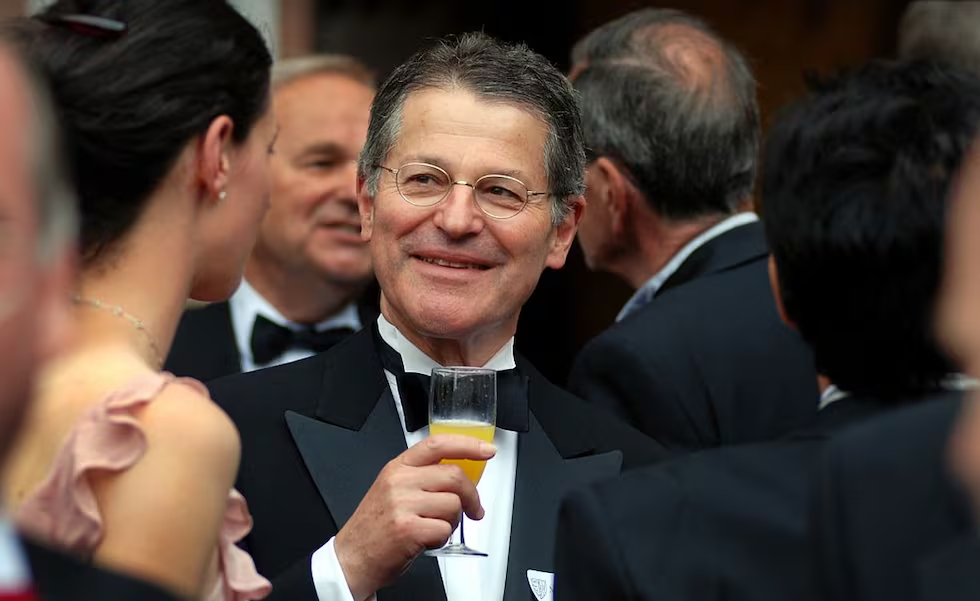
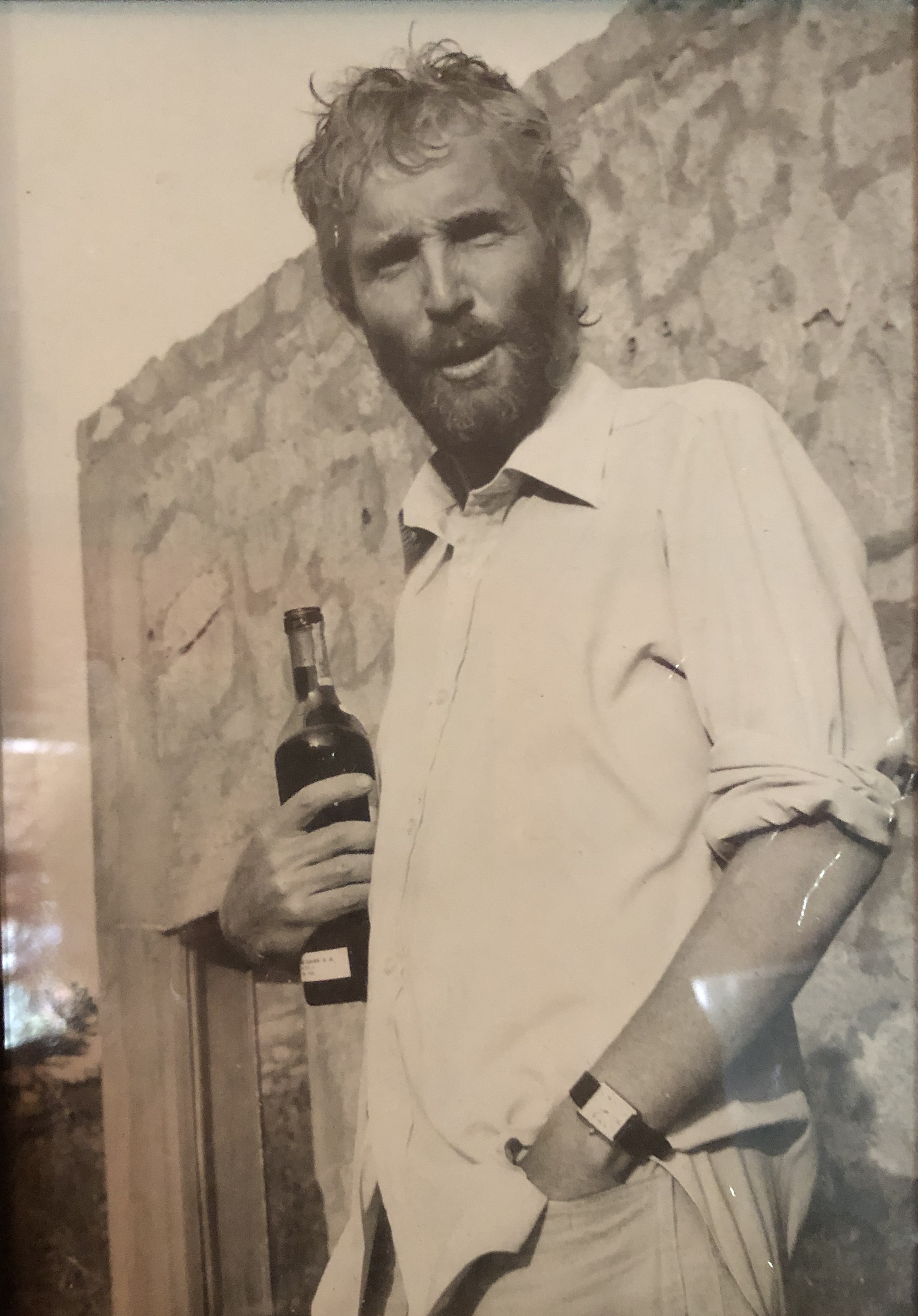
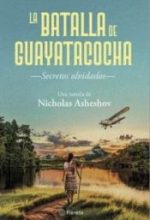
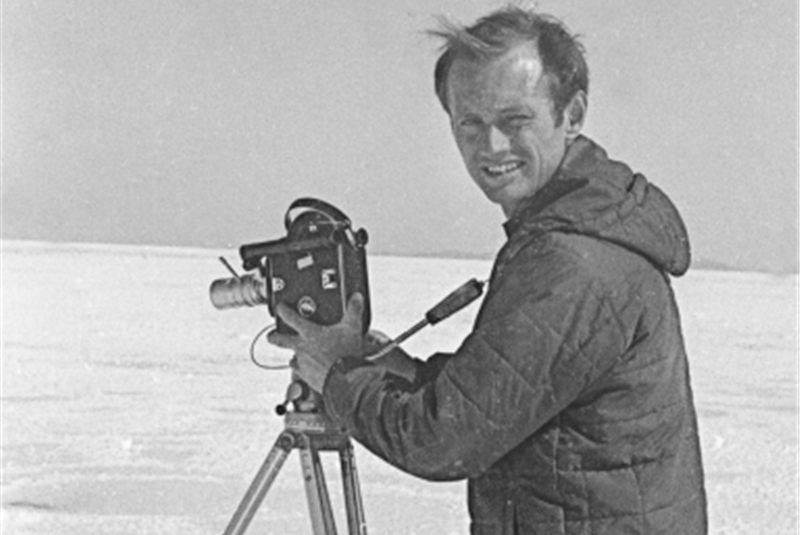


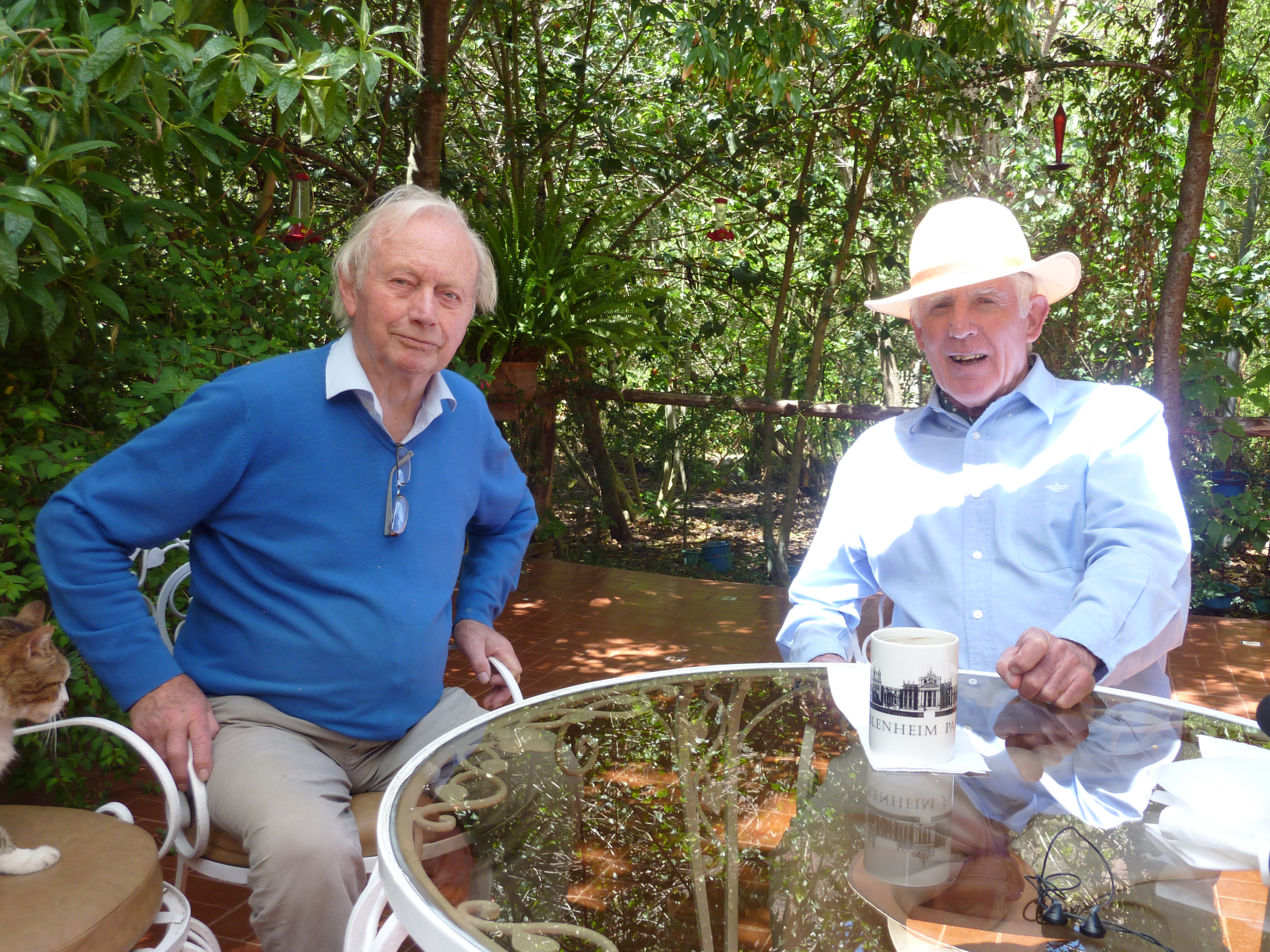



 Nicholas Asheshov